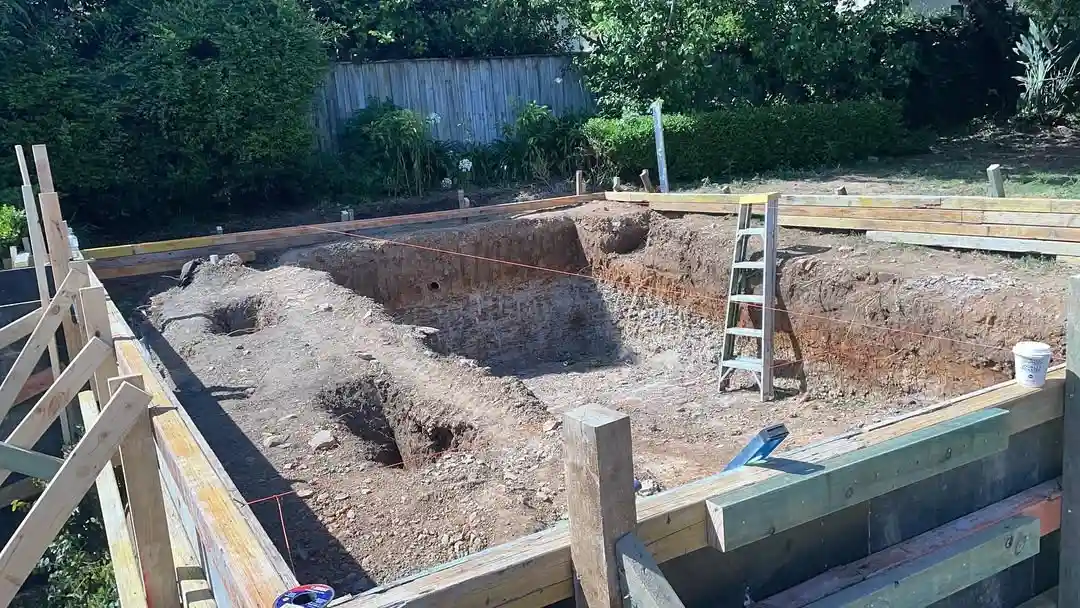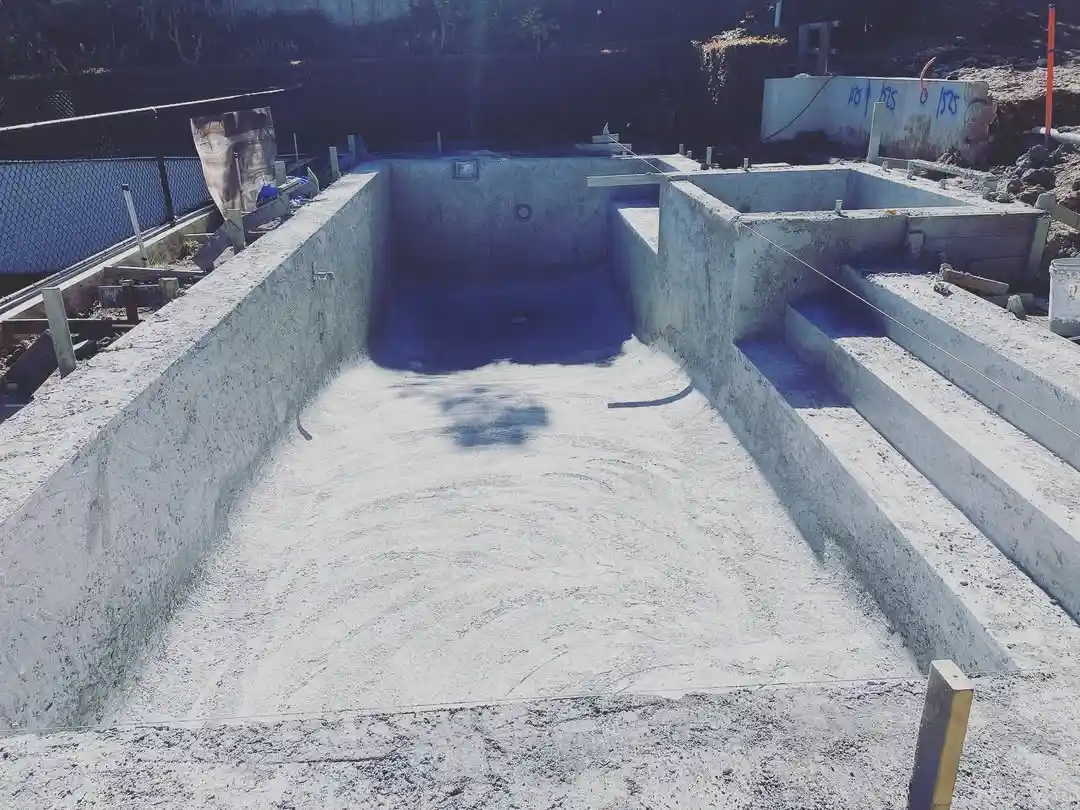
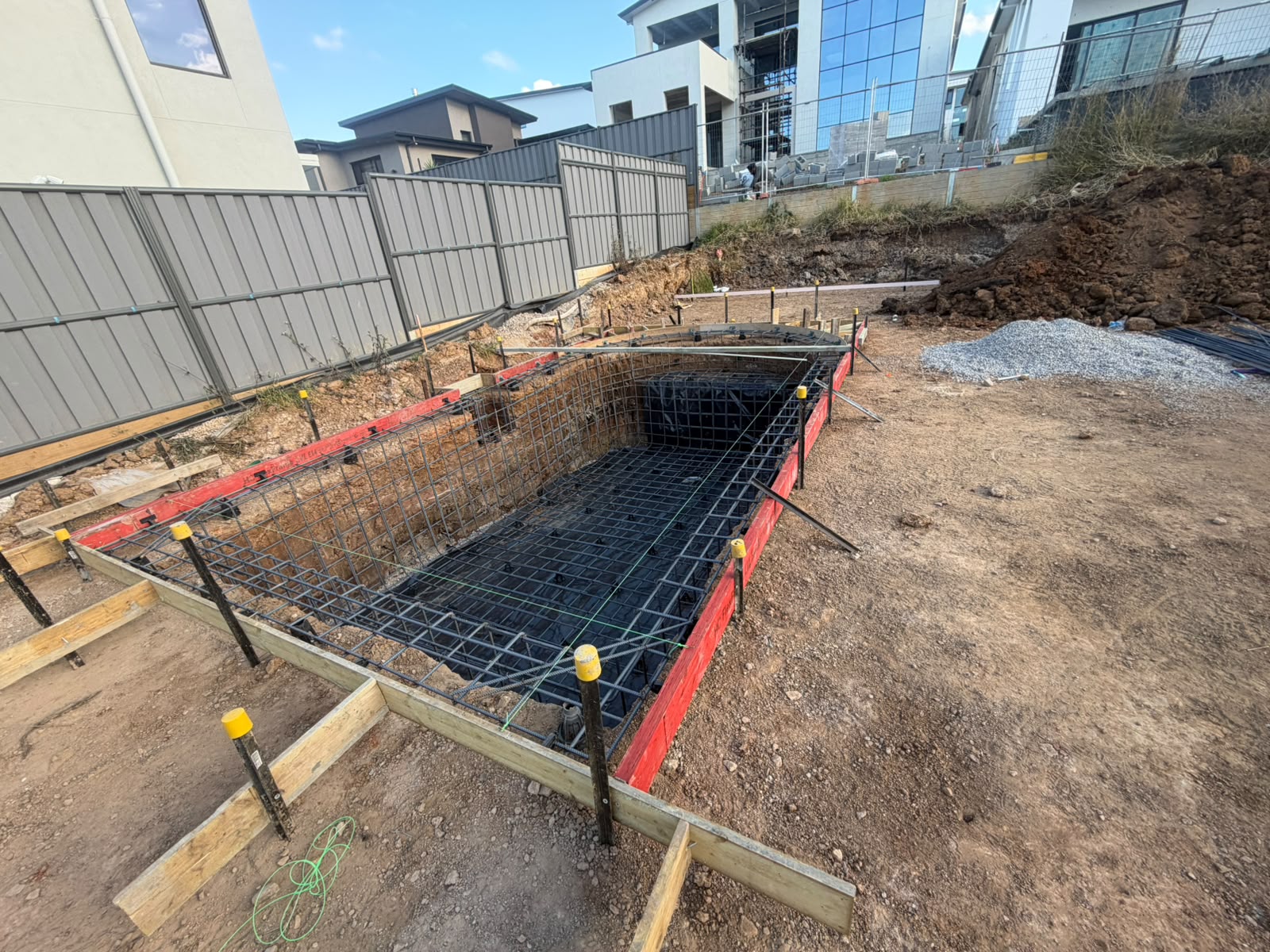
If you’ve read anything about pool steel before, you’ve probably come across the idea that a fraction of a millimetre of crack width can be the difference between a pool that lasts and one that leaks. That same logic applies one step earlier, to the concrete cover sitting over the steel itself. As we’ve covered in our guide to pool steel reinforcement in Sydney, the steel cage is what gives a concrete shell its strength under load. Concrete cover is what keeps that steel alive long enough to do its job for the next 30, 40, or 50 years.
It’s a detail that’s easy to skip over on a site visit, because it’s invisible once the shell is sprayed. But concrete cover pool steel Sydney projects rely on is set by the engineer, checked at inspection, and locked in the moment shotcrete hits the wall. Once it’s covered, it’s covered. This article walks through what the standards actually require, why bar chairs matter more than most homeowners realise, and where cover most commonly goes wrong on real Sydney sites.
Why concrete cover matters more than people think
Concrete cover is simply the depth of concrete between the outer surface of the pool shell and the closest steel bar. It looks like a small technical detail on a drawing, but it does one specific job: it’s the only barrier between the reinforcing steel and everything trying to corrode it, including pool water, groundwater, and in coastal areas, airborne salt.
Steel that’s protected by the right amount of dense, well-compacted concrete can sit there for decades without a problem. Steel that’s too close to the surface starts corroding much sooner, and when steel corrodes it expands, sometimes to several times its original volume. That expansion pushes outward against the concrete around it, which is how you end up with hairline cracking, rust staining bleeding through the render, or in worse cases, spalling where whole chunks of the surface let go.
None of that shows up on day one. It shows up in year three, five, or ten, which is exactly why cover is one of those things worth getting right the first time rather than hoping it was close enough.
What AS 2783 requires for cover on pool steel
AS 2783 cover requirements are the reference point for swimming pool structures in Australia, and it’s the standard your engineer’s drawings will be built around, alongside general concrete structures standards for durability and exposure classification. It doesn’t hand out one single number for every pool everywhere. Instead, cover requirements shift depending on things like:
- The exposure classification of the site (soil type, groundwater, proximity to the coast)
- Whether the element is a wall, floor, or beam, since load paths and reinforcement layout differ
- The concrete strength grade and method of placement, shotcrete versus poured formwork
- Whether the pool is residential or falls under the additional requirements for public and communal pools
This is why the engineer’s stamped drawings, not a general rule of thumb, are the actual source of truth for any given project. If you’ve had structural drawings prepared for a pool build, the cover requirement will be specified there in millimetres, usually alongside bar size, spacing, and lap lengths. Anyone telling you “it’s always 40mm” or similar without having seen your site classification and engineering is guessing.
Worth knowing: cover requirements aren’t just about corrosion protection, they also factor into fire and structural performance in some contexts. Two pools built ten minutes apart can legitimately have different specified cover if their soil classification or exposure conditions differ. Always confirm the actual figure against your own engineering, not a neighbour’s pool or a generic online chart.
Bar chairs: the small part that decides whether cover holds
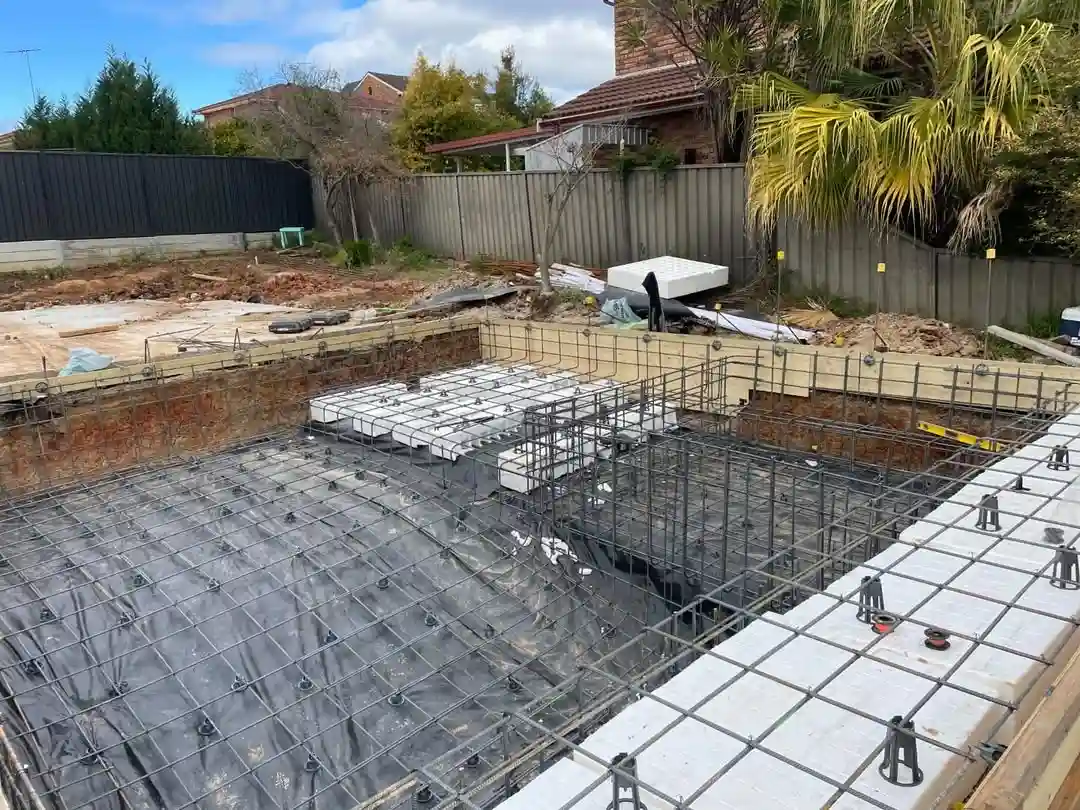
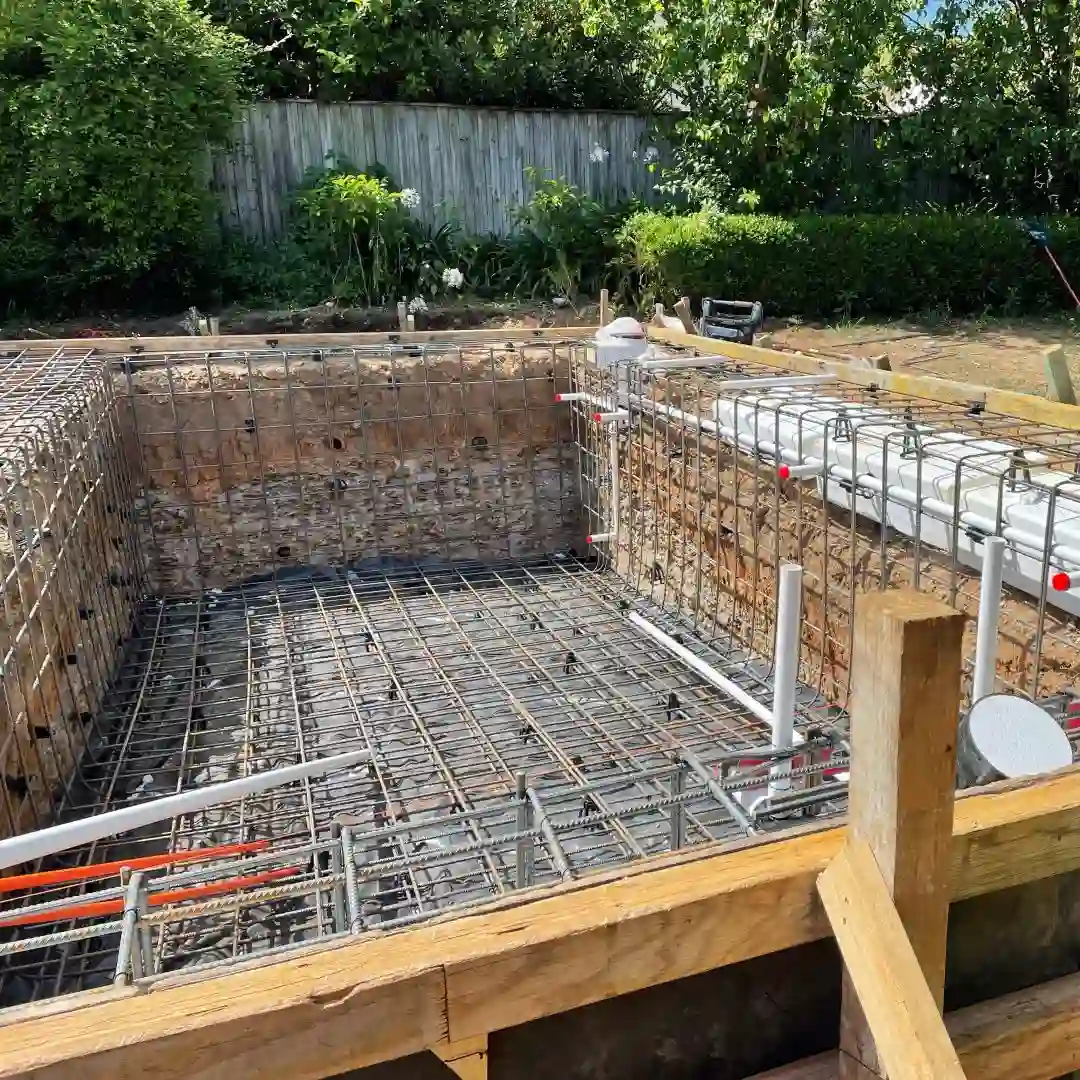
You can tie a steel cage perfectly and still end up with the wrong cover if the cage isn’t held in the right position while concrete goes around it. That’s the job of bar chairs, the small plastic, concrete, or occasionally metal spacers that sit under and against the reinforcing steel to hold it off the formwork face at a fixed distance.
Bar chairs pool steel work relies on need to be rated for the job, spaced closely enough that the steel doesn’t sag or bow between them, and set out consistently around the whole shell, not just clustered near the base. On a vertical pool wall being shotcreted, this matters even more than on a flat slab, because gravity and the force of the shotcrete stream are both working to push steel out of position during the pour.
A cage that looks well-fixed before shotcrete starts can still end up under-covered if:
- Bar chairs are spaced too far apart and the steel deflects between fixing points
- Workers or hoses walk on or lean against the cage during the pour
- Chairs are undersized or the wrong type for the wall thickness and bar diameter
- The formwork itself has shifted slightly from where it was set out
This is one of the more overlooked line items in structural pool construction, and it’s part of why steel fixing is treated as its own trade rather than something bundled loosely into general concreting.
Cover and spacing work together, not separately
Cover doesn’t operate in isolation. Pool steel spacing standards, meaning the gaps between individual bars in the mesh or cage, are set with cover in mind, because both affect how well concrete can actually get around and behind the steel during placement.
If bars are spaced too tightly for the given cover and concrete grade, you can end up with what’s often called “honeycombing,” where the concrete or shotcrete mix can’t fully work its way behind congested steel, leaving voids. Those voids are effectively zero cover in that spot, regardless of what the drawing specified. This is one of the reasons experienced steel fixers pay attention not just to bar count and diameter, but to how the whole cage sits together as concrete needs to flow around it.
Rebar cover swimming pool structures depend on is, in that sense, as much about workmanship during fixing as it is about the number written on the drawing. The design can be perfect and still fail on site if the steel isn’t fixed the way it was designed to sit.
Typical cover figures by pool element
The table below gives general, indicative figures only, based on common Sydney residential shotcrete pool practice. They are not a substitute for project-specific engineering and should never be used to check or challenge an engineer’s drawings. Your own specification always governs.
| Pool element | Typical indicative cover | Why it varies |
|---|---|---|
| Shotcrete walls | Roughly 30–50mm | Depends on wall thickness, exposure class, and finish type |
| Floor slab | Roughly 40–50mm | Ground contact side generally needs more cover than internal face |
| Bond beam / coping edge | Set by engineer, often tighter tolerances | High-load zone with coping and fixtures fastened nearby |
| Public/communal pools | Often greater than standard residential | Additional durability and safety margins under relevant standards |
For a broader look at how these figures shift for community and commercial pools specifically, our complete guide to structural standards for public swimming pools goes into the additional requirements that apply once a pool isn’t just for private residential use.
Where cover gets tested on Sydney sites
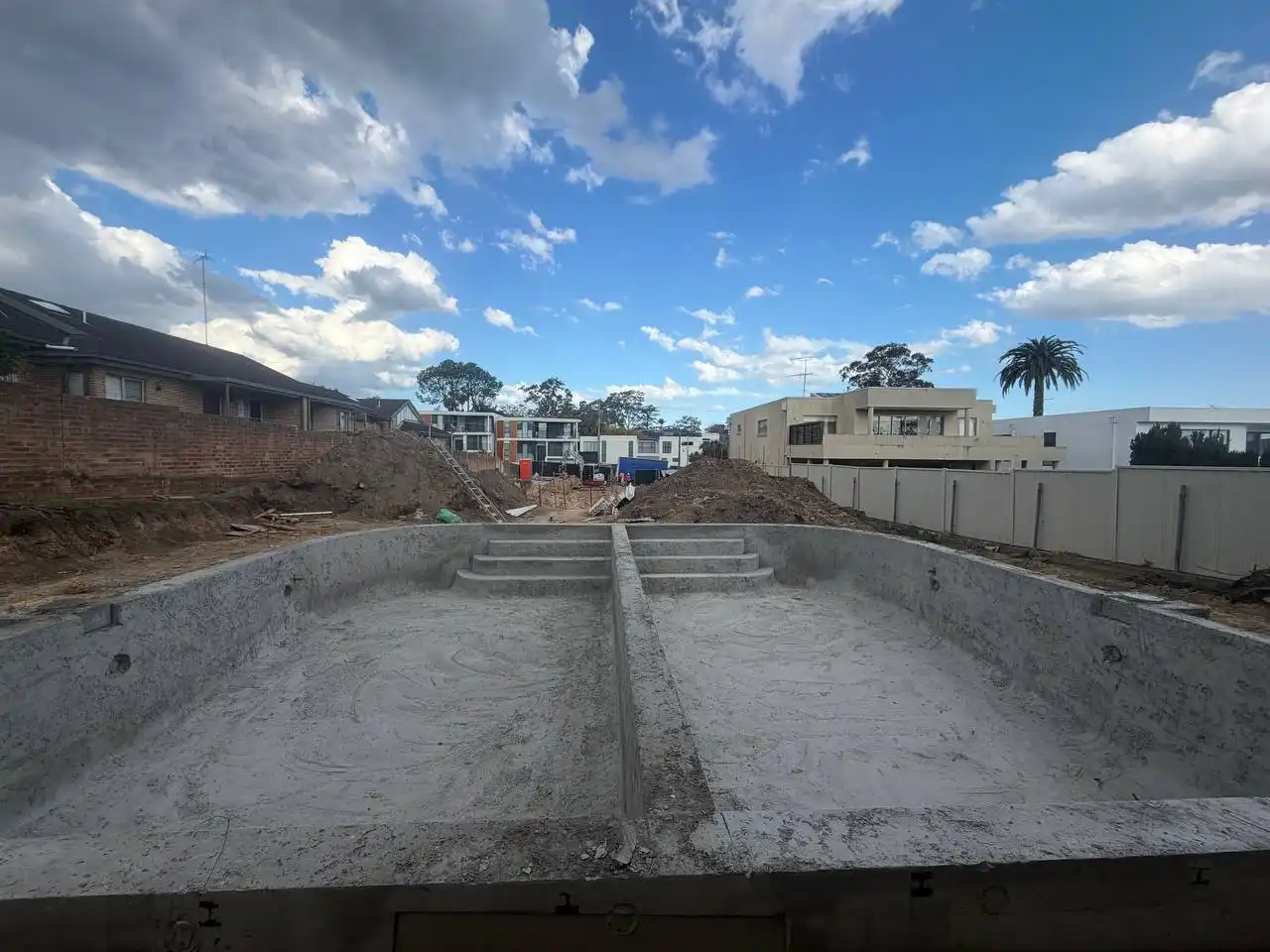
Cover requirements don’t change because of a suburb name, they change because of soil, groundwater, and site exposure conditions, which happen to vary a lot across Sydney’s geography. A few examples of where this plays out in practice:
- Pool steel fixing Northern Beaches jobs often deal with sandy, free-draining soils and closer proximity to salt air, both of which push exposure classification and durability requirements higher on the engineer’s specification.
- Pool steel fixing Hills District sites more commonly sit on reactive clay soils, where the structural design and steel detailing has to account for ground movement as much as chemical exposure.
- Pool reinforcement Sutherland Shire projects can involve anything from sandstone benching to low-lying, higher water table blocks, so cover and waterproofing detailing are often reviewed together rather than in isolation.
The practical takeaway is the same wherever you are in Sydney: the site’s own soil report and engineering, not a general figure from the internet, should be what your contractor is fixing steel to. A contractor who’s worked across these different conditions will generally flag the site-specific factors during the quote stage rather than after the steel is already going in.
How this actually gets checked on site
In practice, cover is confirmed at a pre-pour or reinforcement inspection, which most Sydney councils and private certifiers require before shotcrete can be applied. This is the point where a certifier, or the engineer if they’re doing the inspection themselves, physically checks bar size, spacing, lap lengths, and cover to the formwork face using cover meters or simple spacer checks.
It’s worth understanding that this inspection is effectively the last checkpoint. Once shotcrete is applied, verifying cover accurately requires specialist equipment or invasive testing, neither of which is something a homeowner would typically arrange for a routine build. If you want peace of mind, ask your contractor whether you can be present for the steel inspection, or ask for photos of the fixed cage before shotcrete day. A contractor confident in their fixing work generally won’t hesitate to show you.
FAQs
What is concrete cover in pool construction and why does it matter?
Concrete cover is the thickness of concrete between the outer face of the pool shell and the nearest steel reinforcing bar. It matters because that layer of concrete is the only thing stopping moisture, chlorides, and ground salts from reaching the steel. Too little cover and the bar can corrode and expand within a few years, cracking the shell from the inside out.
How much concrete cover does AS 2783 require for pool steel reinforcement?
AS 2783, the Australian Standard for swimming pool structures, sets minimum cover requirements that vary with exposure conditions and pool element, and the actual figure for your project is set out on your engineer’s approved drawings rather than a single blanket number. As a general guide, cover to reinforcement in shotcrete pool shells commonly sits in the 30 to 50mm range, with the engineer’s specification always taking precedence over any rule of thumb.
What happens if concrete cover is too thin or too thick?
Cover that is too thin leaves steel exposed to moisture and chloride attack, which leads to corrosion, rust staining, and eventually cracking or spalling of the shell. Cover that is too thick pushes the steel away from where it does its structural job, effectively reducing the concrete’s tensile strength at that point and increasing the risk of larger surface cracks. Both extremes are corrected the same way, by fixing bar position accurately before shotcrete goes on.
Do bar chairs really make a difference to cover?
Yes. Bar chairs are the small plastic or concrete spacers that hold reinforcing steel off the formwork and at the correct height within the shell. Without enough of them, spaced correctly and rated for the job, steel sags or gets walked on during the pour and ends up sitting closer to the surface than the drawings specify, no matter how carefully it was tied in the first place.
Can I check concrete cover before shotcrete goes on?
Yes, and this is usually the last practical chance to catch a cover problem. Most Sydney councils and certifiers require a steel inspection, sometimes called a pre-pour or reinforcement inspection, before shotcrete is applied. This is the point to physically check bar chair spacing, cover to the formwork face, and lap lengths, because once the shotcrete is on, cover can only be confirmed with cover meters or invasive testing.
Got a Site in Sydney and Need a Straight Answer?
We’ll come out, look at your block, tell you honestly what’s achievable, and put a written quote in your hands within 24 hours. No obligation, no phone-quote guesswork.
Related reading
Pool Steel Reinforcement Sydney: The 0.2mm Margin in Pool Construction StrengthStructural Standards for Public Swimming Pools: A Complete GuideShotcrete vs Gunite for Sydney Pools: What’s Actually DifferentPool Construction Process: Step-by-Step Guide to Building a Swimming PoolHow Much Does a Concrete Pool Cost in Sydney? What Really Affects the Price