You’ve probably already Googled this a few times. And every time you’ve hit a page that gives you a dollar figure with no context, or worse, a vague “it depends” and a form asking for your details.
Here’s the honest answer: the cost of a concrete pool in Sydney does depend — but on very specific things. And if you understand those things, you’ll be able to read a quote properly, ask the right questions, and avoid the builders who are padding their margins or cutting corners.
We’re Sydney Pools Steel. We’ve been building concrete pools right across Sydney for over a decade — from the Northern Beaches down to Sutherland Shire, from the Hills District across to the Eastern Suburbs. This article walks you through every factor that moves the price of a concrete pool build — and what to watch for when you start comparing quotes.
Why Concrete Pool Costs Vary So Much in Sydney
A concrete inground pool is a fully custom structure built on your specific site, in your specific soil, by specific tradespeople. Unlike an off-the-shelf product, there’s no standard price because there’s no standard pool. Two homes on the same street can produce very different quotes depending on what’s under the grass.
The cost of a concrete pool build broadly covers five stages:
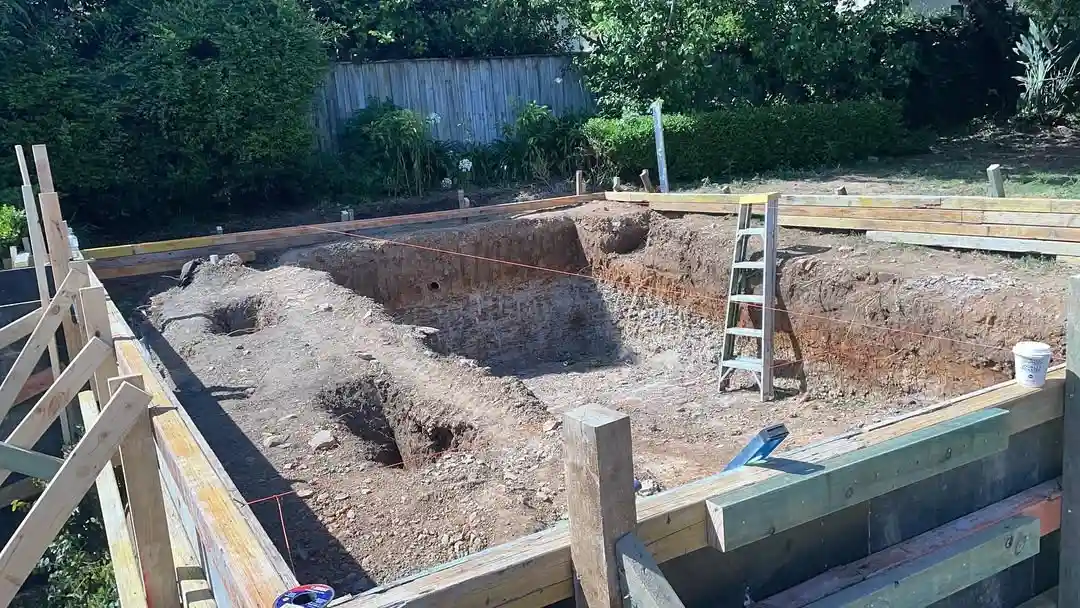
Pool excavation
Site prep, spoil removal, base compaction
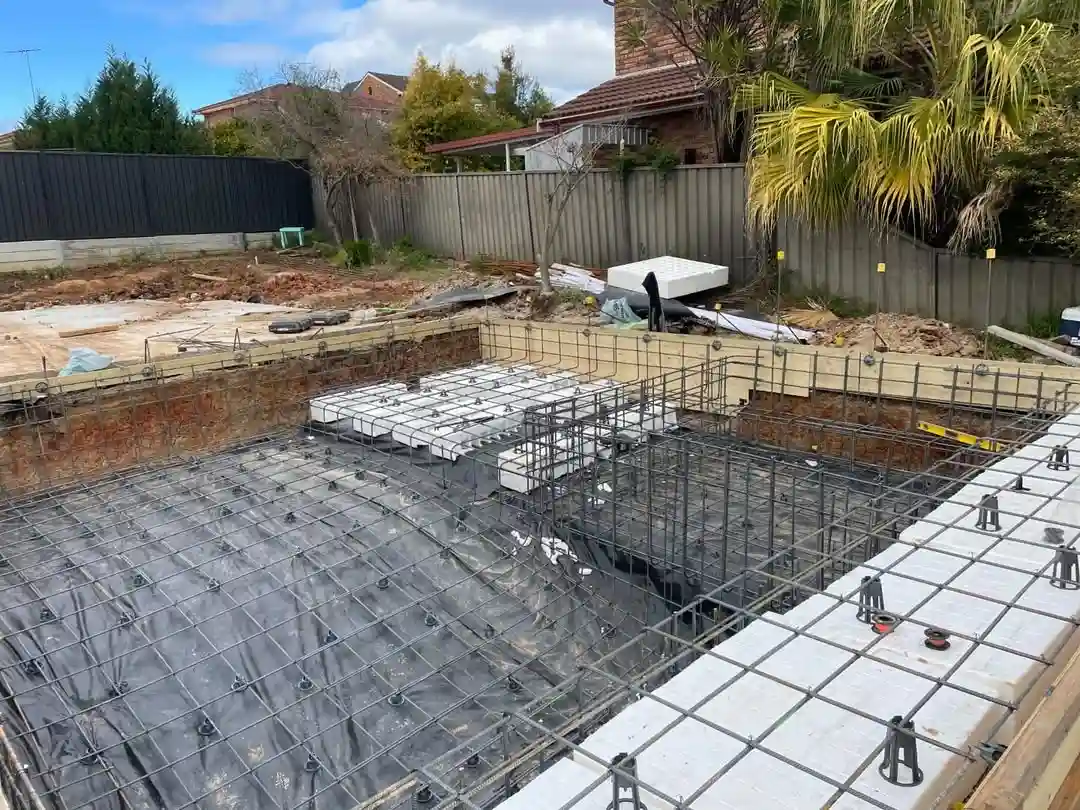
Steel formwork
Engineer-specified rebar placement and tying
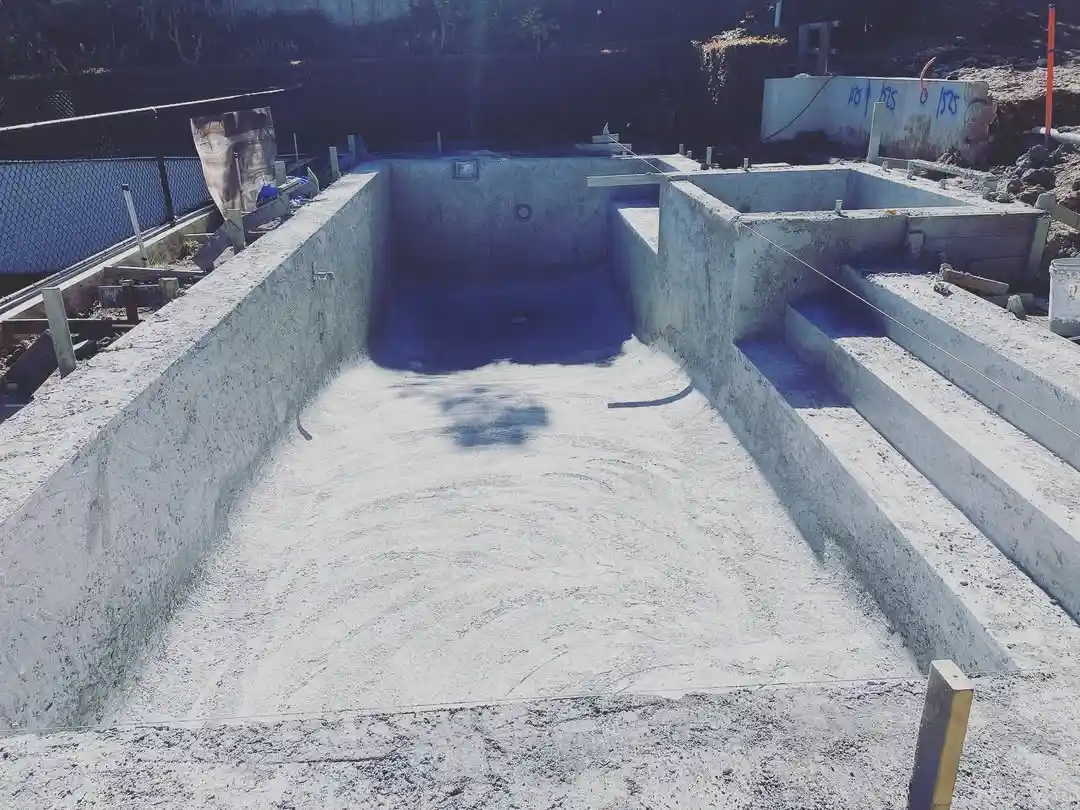
Shotcrete shell
Structural concrete shell application
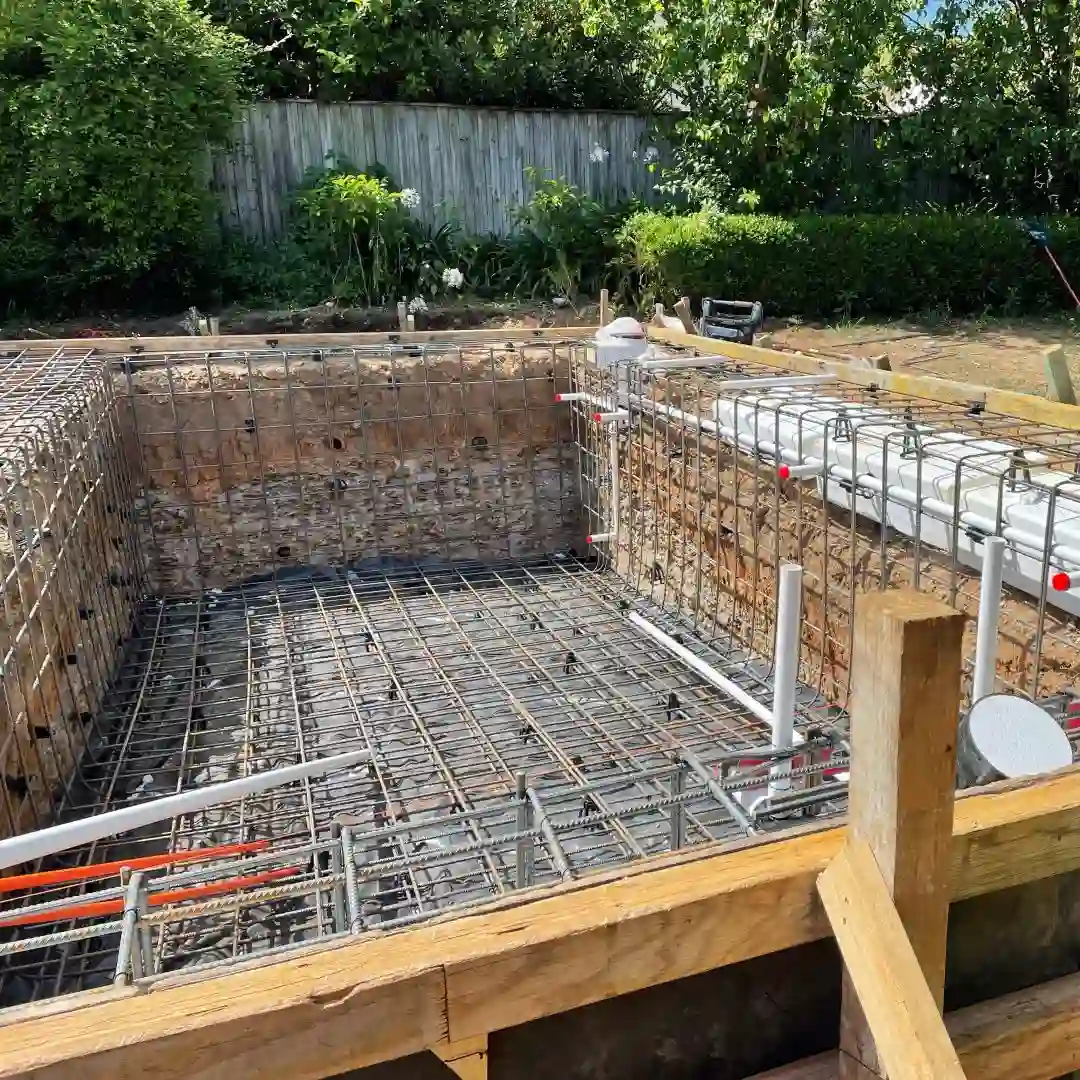
Pool plumbing
Pipes, pump, filter, pressure testing
Key Factors That Drive Concrete Pool Cost in Sydney
Here’s how each factor pushes the price in either direction — and why.
| Cost factor | Lower impact | Higher impact |
|---|---|---|
| Pool size | Compact, standard footprint | Large or oversized pool |
| Pool shape | Rectangular, simple geometry | Freeform, curves, multiple levels |
| Site conditions | Flat block, easy machine access | Sloped, rocky, or tight-access site |
| Soil type | Sandy loam or soft fill | Clay-heavy or rock |
| Steel & formwork | Straightforward geometry, one level | Complex shape, spa, bench seats |
| Finish choice | Pebblecrete or render | Hand-set glass tiles or mosaic |
| Plumbing complexity | Short runs, simple filtration | Long runs, water features, spa |
Pool size and shape
The bigger the pool, the more of everything it takes — more excavation, more steel, more shotcrete, more plumbing. That much is obvious. What surprises people is how much shape matters. A rectangular pool is the most efficient structure to build. Freeform pools with organic curves, attached spas, or split-level designs are beautiful — but they take significantly more time and skill to frame correctly, and that complexity is reflected in the final cost.
Site conditions and access
This is the factor that catches most Sydney homeowners off guard. Pool excavation isn’t just digging a hole — it’s managing everything from site access for machinery to rock breaking, spoil removal, drainage, and base preparation. A flat block with wide side access is the best case. A sloped block, a narrow side gate, mature tree roots, or a neighbour’s retaining wall all add time and cost.
Sydney soil types
Soil type has a direct impact on both the excavation cost and the structural requirements of the pool shell. Sydney is a city of soil diversity:
- Hills District and Western Sydney: heavy clay, which expands and contracts seasonally. Clay-dominant sites require more robust steel reinforcement and careful excavation technique to avoid collapse.
- Eastern Suburbs and Northern Beaches: sandstone and rock are common once you get below the topsoil layer. Rock breaking is slower and more expensive than soil excavation.
- Inner West and Parramatta: often a mix of fill, clay, and older infrastructure like original drainage lines and footings. Surprises are more common here than elsewhere.
Steel reinforcement and formwork
The steel formwork and reinforcement stage is where your pool gets its structural integrity. Engineer-specified rebar is laid to a precise pattern, tied by hand, inspected, and signed off before any concrete is applied. This is not a stage where savings are worth pursuing — the steel protects the shell from ground movement, hydrostatic pressure, and the long-term stress of Sydney’s variable soils.
To understand exactly why rebar placement and concrete cover have such a direct impact on pool longevity, read our guide on pool steel reinforcement standards for concrete pools.
NOTES: Pools with under-specified reinforcement look fine for a few years — and then they crack. The steel cage is the difference between a pool that lasts a decade and one that lasts a lifetime.
Shotcrete application
The shotcrete pool construction process involves pneumatically projecting concrete at high velocity onto the rebar framework. This creates a denser, stronger shell than poured concrete — with no cold joints or seams. Curing after application is just as important as the application itself. A shell that’s not kept moist for the right period won’t reach its full strength rating. This is a step some builders rush. We don’t.
Plumbing and filtration
Your pool plumbing rough-in setup scales in cost with how far the equipment pad sits from the pool, how many return jets the design calls for, and whether there’s a spa or water feature. We pressure-test every plumbing run before the concrete goes over it — fixing a leak buried under the shell is an expensive and disruptive job.
Surface finish
Surface finish is chosen by you and your pool builder — it doesn’t affect our structural scope, but it significantly affects the overall project budget. Here’s what the common options typically cost:
- Pebblecrete: the most common finish in Sydney. Durable, textured, and available in a wide range of tones.
- Rendered and painted: a smoother look at a lower finish cost, but requires repainting every few years.
- Glass tiles: the premium option. Individually hand-set, visually stunning, and significantly more labour-intensive.
Finish choice alone can shift the overall project cost considerably. It’s worth seeing physical samples before you commit.
Costs Outside the Core Build That Sydney Homeowners Should Plan For
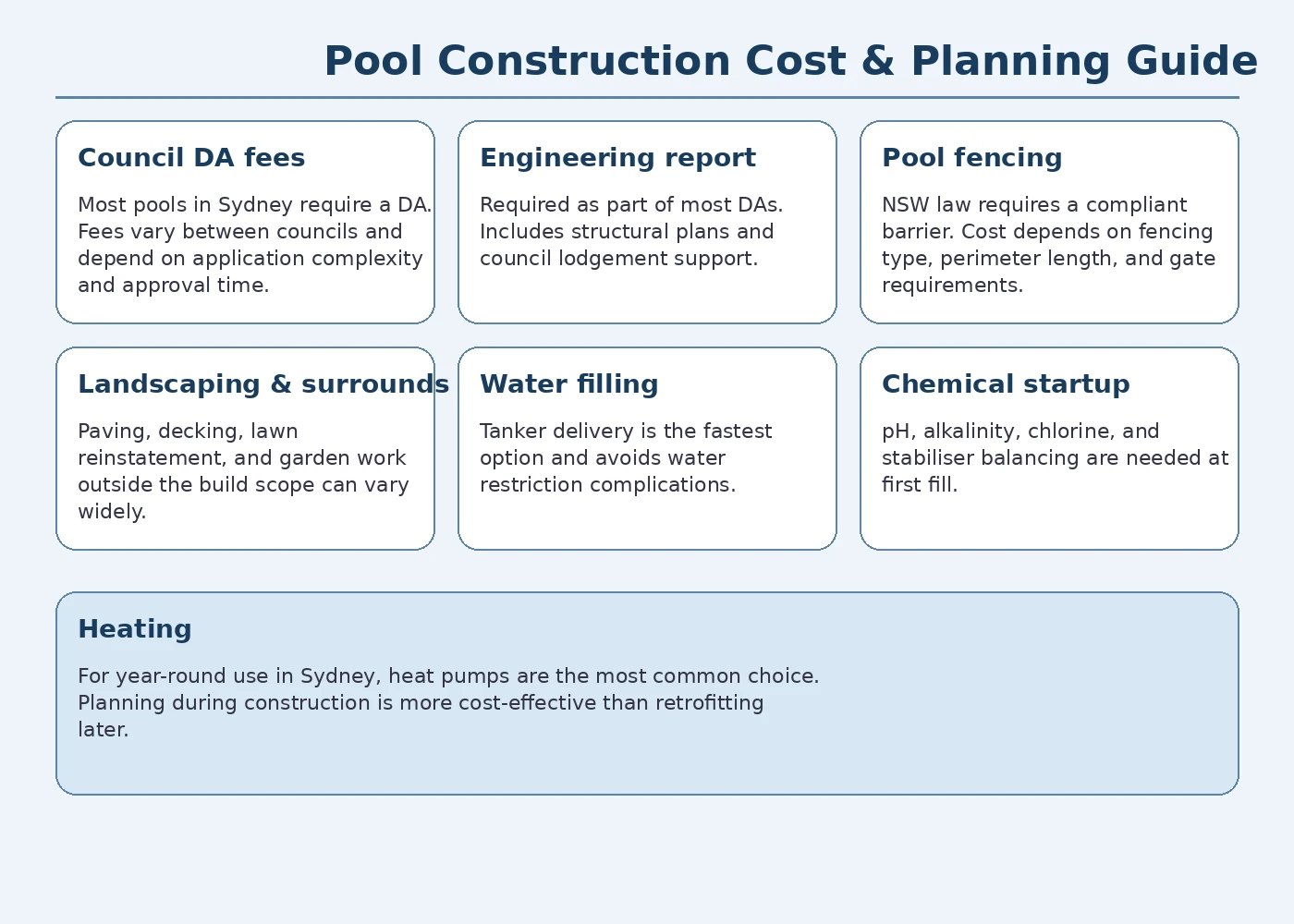
A well-scoped quote covers the construction itself. But there are costs that sit outside the build scope, and they add up. Here’s what to budget for separately:
Concrete vs Fibreglass — Is the Extra Cost Worth It?
Fibreglass pools — pre-moulded shells craned into an excavation — are faster to install and typically lower in upfront cost for standard sizes. So why do so many Sydney homeowners still choose concrete?
Fiberglass
What fibreglass does well
- Faster installation from excavation to water-ready
- Lower upfront cost for standard shapes and sizes
- Smooth gelcoat surface, gentle underfoot
Concrete — recommended
Where concrete wins
- Fully custom — any size, shape, depth, or configuration
- Significantly longer structural lifespan with proper maintenance
- Better suited to Sydney's clay-heavy soils — less risk of shell deformation
- Can be resurfaced, retiled, and renovated without replacing the structure
- Handles ground movement better on sloped or rocky sites
If you want a standard size, a flat block, and a shorter build timeline, fibreglass is a legitimate option. If you want a truly custom pool — or your site conditions make fibreglass a structural risk — concrete is the right call.
How Sydney Pools Steel Approaches a Quote
Every quote we prepare starts with a site visit. No exceptions. We walk the block, look at the soil, check machine access, identify any easements or underground services, and talk through exactly what you want to build. A quote without seeing your property isn’t a quote — it’s an estimate based on assumptions.
What sits outside the core quote is stated clearly: council fees, fencing, landscaping, heating, and water. No hidden surprises. We build pools across all of greater Sydney — Hills District, Northern Beaches, Inner West, Eastern Suburbs, Parramatta, Western Sydney, Sutherland Shire, and Blacktown.
What to Watch for When Comparing Pool Quotes
Getting multiple quotes is the right move. But comparing them requires scrutiny — not all quotes include the same scope. Here’s what to look for:
Is the scope detailed or vague?
Ask for a line-by-line breakdown: excavation, steel, shotcrete, plumbing — each as a separate scope item. "Fully installed" tells you almost nothing.
What's excluded and what's not mentioned?
Fencing, heating, landscaping, council fees — if these aren't explicitly excluded, ask whether they're included. Ambiguity here is where disputes start.
Was there a site visit before the quote?
If a builder quotes you without coming to the site, that number will change. Walk away.
Is the steel engineer-certified?
Ask whether rebar placement is inspected by a structural engineer before shotcrete is applied. This is standard practice — a red flag if a builder can't confirm it.
What's the curing process?
Shotcrete needs to be kept moist for several days after application. Builders who skip this step compromise the shell's strength.
Is the plumbing pressure-tested?
Every pipe run should be tested before it's buried. If a joint fails later, you're looking at a major excavation job to fix it.
Our full pool construction process is documented in detail on the site if you want to understand exactly what each stage involves and what good practice looks like.
If you’re ready to get a real picture of concrete pool cost in Sydney for your specific site, we offer a free site visit and written quote within 24 hours.
FAQs
What factors affect the cost of a concrete pool in Sydney?
The main factors are pool size and shape, site conditions (slope, access, soil type), the complexity of the steel and formwork, the shotcrete application, plumbing requirements, and surface finish. Each of these varies from project to project, which is why site-specific quotes matter.
Why does a concrete pool cost more than a fibreglass pool?
Concrete pools are fully custom-built on your site using structural rebar, engineer-certified formwork, and shotcrete. The process involves multiple specialist trades over several weeks. Fibreglass pools are pre-moulded and installed faster, which reduces labour time. The extra investment in concrete buys you a fully bespoke structure with a significantly longer lifespan and better performance on challenging Sydney sites.
What costs should I budget for outside the pool build itself?
Plan separately for council DA fees, a structural engineering report, pool fencing (required by NSW law), landscaping and surrounds, water filling, chemical startup, and heating if you want year-round use. These are real costs that sit outside most builder scopes and are worth pricing before you finalise your overall budget.
How long does it take to build a concrete pool in Sydney?
From council approval to completion, most concrete pool builds take eight to sixteen weeks. DA approval alone typically takes four to eight weeks depending on your council. The physical build — from excavation through to coping — usually runs four to six weeks on a straightforward site, longer on more complex ones.
Does Sydney Pools Steel provide free quotes?
Yes. We offer a free site visit and written quote for all concrete pool projects across greater Sydney. We come to your property, assess the site conditions, and provide a detailed scope-based quote within 24 hours. Contact us here to book.
What areas of Sydney does Sydney Pools Steel service?
We build concrete pools across all of greater Sydney, including the Hills District, Parramatta, Northern Beaches, Inner West, Eastern Suburbs, Western Sydney, Sutherland Shire, and Blacktown. If you’re in the Sydney metro area, get in touch and we’ll confirm coverage for your suburb.
Ready to get a clear picture for your pool?
No pressure, no overselling — just a clear-eyed look at your site, your goals, and what it genuinely takes to build a pool that will last. We’ll get back to you within 24 hours.