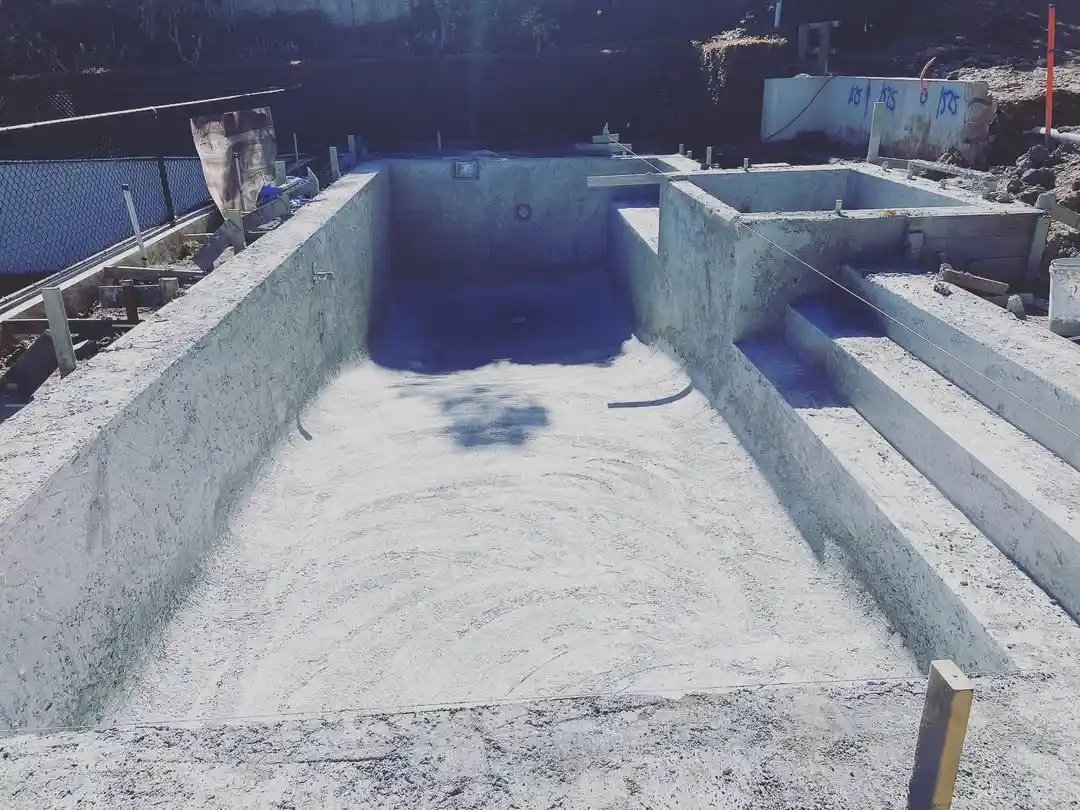
Search “shotcrete vs gunite” and you’ll get a dozen confident, contradictory answers. Here’s the actual technical distinction behind the terms, why it barely matters which word your contractor uses, and what genuinely does matter for your pool shell.
If you’ve spent any time researching pool construction, you’ve probably hit the same wall we see homeowners hit constantly: half the articles say shotcrete and gunite are completely different products, and the other half say they’re the same thing. Both are sort of right, which is exactly why the question keeps coming up. The confusion isn’t your fault — it comes from decades-old trademark history that most pool marketing never bothers to untangle.
We covered the structural side of this stage in our piece on pool steel reinforcement and the 0.2mm crack standard. This article picks up where that one left off, focused specifically on the shotcrete application itself: what the terms mean, the real distinction that matters, and what it means for the strength and finish of your shell.
Shotcrete and gunite: same family, different history
“Gunite” started life as a trademark, not a generic building term. According to the history documented on Wikipedia’s entry on shotcrete, the dry-mix spraying process was patented in 1909 and marketed under the Gunite brand name. When a competing manufacturer trademarked the term, the wider industry needed a neutral word that didn’t belong to one company, and by 1951 “shotcrete” had become the accepted generic name for both wet and dry sprayed concrete.
In practice, that means “gunite” almost always refers to what the industry now calls dry-mix shotcrete, while “shotcrete” on its own can mean either the wet-mix or dry-mix method. In the Australian pool industry specifically, “shotcrete” is by far the more common working term, and you’ll rarely hear a licensed structural crew here use “gunite” as anything other than an old-fashioned synonym picked up from American pool marketing.
The short version: gunite is essentially old branding for dry-mix shotcrete. The word doesn’t tell you anything about quality on its own — the actual method, and how well it’s executed, is what determines the result.
The distinction that actually matters: wet-mix vs dry-mix
| Method | How it works | Where it tends to suit best |
|---|---|---|
|
Dry-mix shotcrete (often called “gunite”) |
Dry materials travel through the hose; water is added at the nozzle, giving the operator instant control over water content |
Smaller or more complex shell sections and jobs needing frequent stop-start |
|
Wet-mix shotcrete |
Concrete is fully mixed beforehand and pumped to the nozzle, where compressed air propels it onto the surface |
Larger continuous placements — which describes most residential pool shells — with less rebound and material waste |
Why Sydney's climate makes the standard non-negotiable
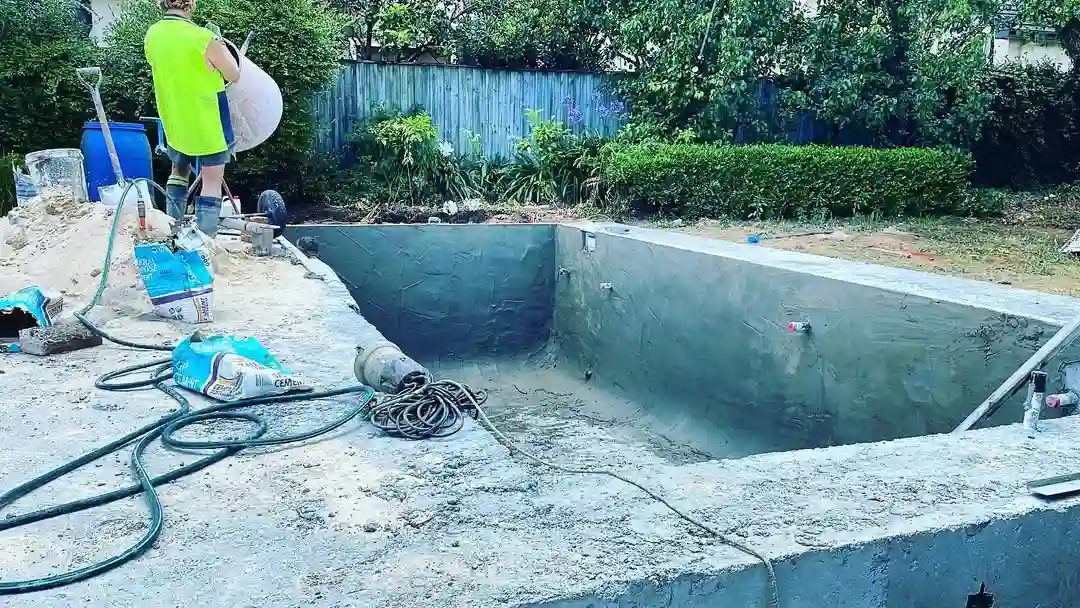
Whichever method is used, the result has to meet the same structural bar. As we detailed in our reinforcement article, aquatic structural standards such as AS 2783 limit crack widths in a pool shell to around 0.2mm, specifically to stop water reaching the steel reinforcement and causing corrosion from the inside out. Sydney’s seasonal temperature swings put genuine thermal stress on a concrete shell, so this isn’t a fussy technical box-tick — it’s the difference between a shell that stays watertight for decades and one that starts showing hairline cracks within a few years.
That standard applies regardless of whether the shotcrete was placed wet-mix or dry-mix. A good applicator working to the standard, with proper curing afterward, is what gets you there — not the label on the method.
Why block access can decide the method for you
In practice, the method often gets decided less by preference and more by what a specific block allows:
- Northern Beaches and North Shore blocks — suburbs like Manly, Mona Vale, Chatswood and Turramurra frequently have narrow side access, sloped sites, or established gardens that limit how much equipment can reach the pool area at once, which can favour the flexibility of dry-mix for tighter sections.
- Hills District and Sutherland Shire acreage-style blocks — larger, more open sites in areas like Castle Hill or Menai often allow continuous, high-volume placement, where wet-mix’s speed and lower waste become the more efficient choice.
- Western Sydney developments — newer builds around areas like Penrith and Liverpool typically have more open, unobstructed access, again suiting a straightforward wet-mix pour in most cases.
- Eastern Suburbs terraces and inner-ring blocks — tight rear yards with limited crane or pump access sometimes need a hybrid approach, applying dry-mix to awkward corners and steps even where the main shell is placed wet-mix.
None of this is a hard rule — access, budget, and the shape of the pool design all factor in — but it explains why two neighbours can get pools built with different shotcrete methods and both end up with a perfectly sound shell.
What to ask your pool contractor
Whichever contractor you use for the shotcrete stage, these are reasonable, specific questions to ask — and a contractor with real structural experience should be able to answer all of them without hesitation:
- Which method are you using on my site, and why does that suit this block specifically?
- How do you control shell thickness and cover over the reinforcement during application?
- What crack-width standard are you working to, and how is that checked?
- How long will the shell cure before the next trade starts work on it?
- Who is the qualified operator physically applying the shotcrete, and what’s their experience with pool shells specifically, as opposed to other shotcrete applications like retaining walls or tunnelling?
Red flag to watch for: a contractor who treats “shotcrete vs gunite” as a marketing point rather than a genuine technical question. If they can’t explain their method and why it suits your site, that’s a bigger concern than which word they use for it.
How this fits into the rest of the build
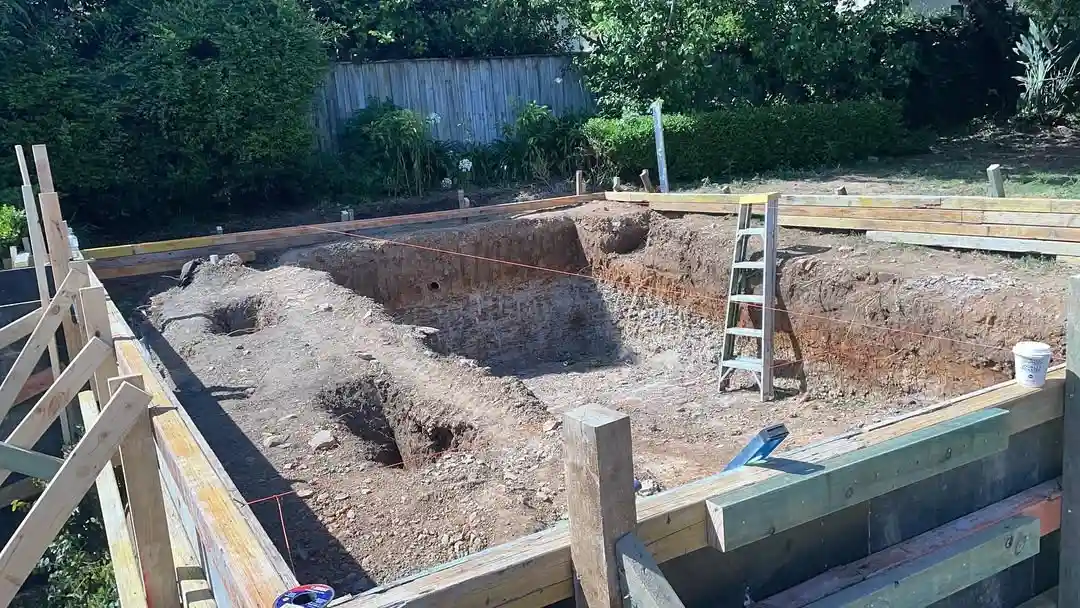
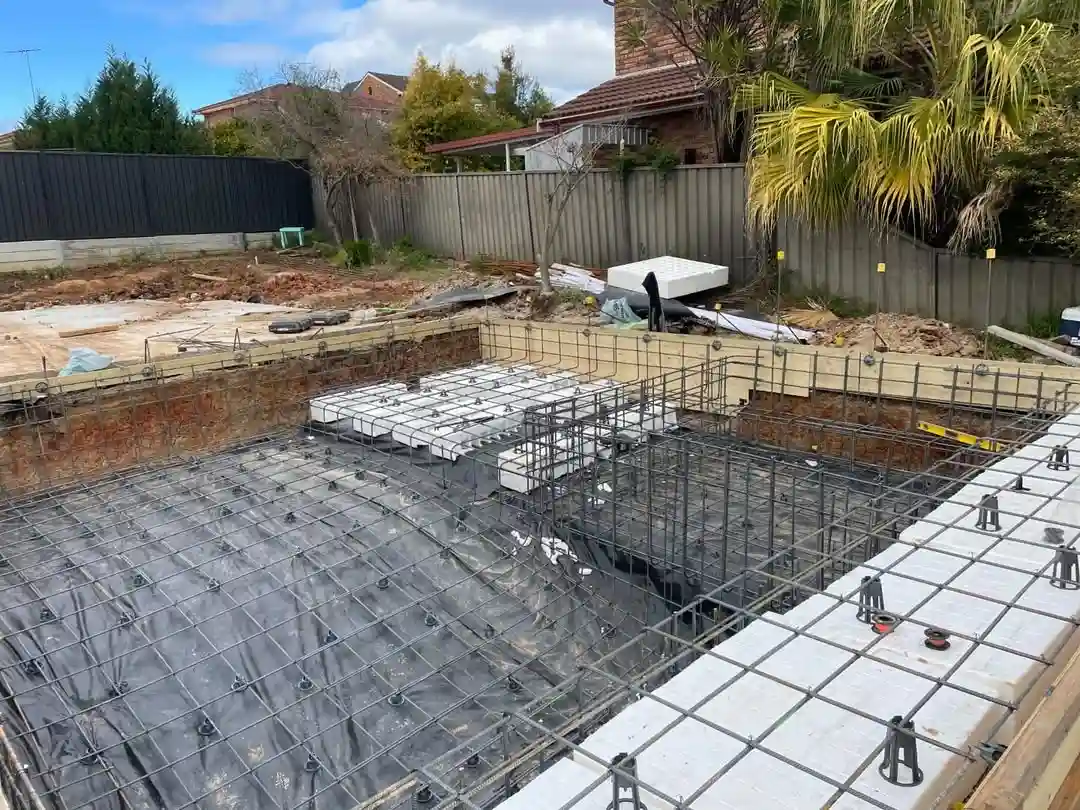
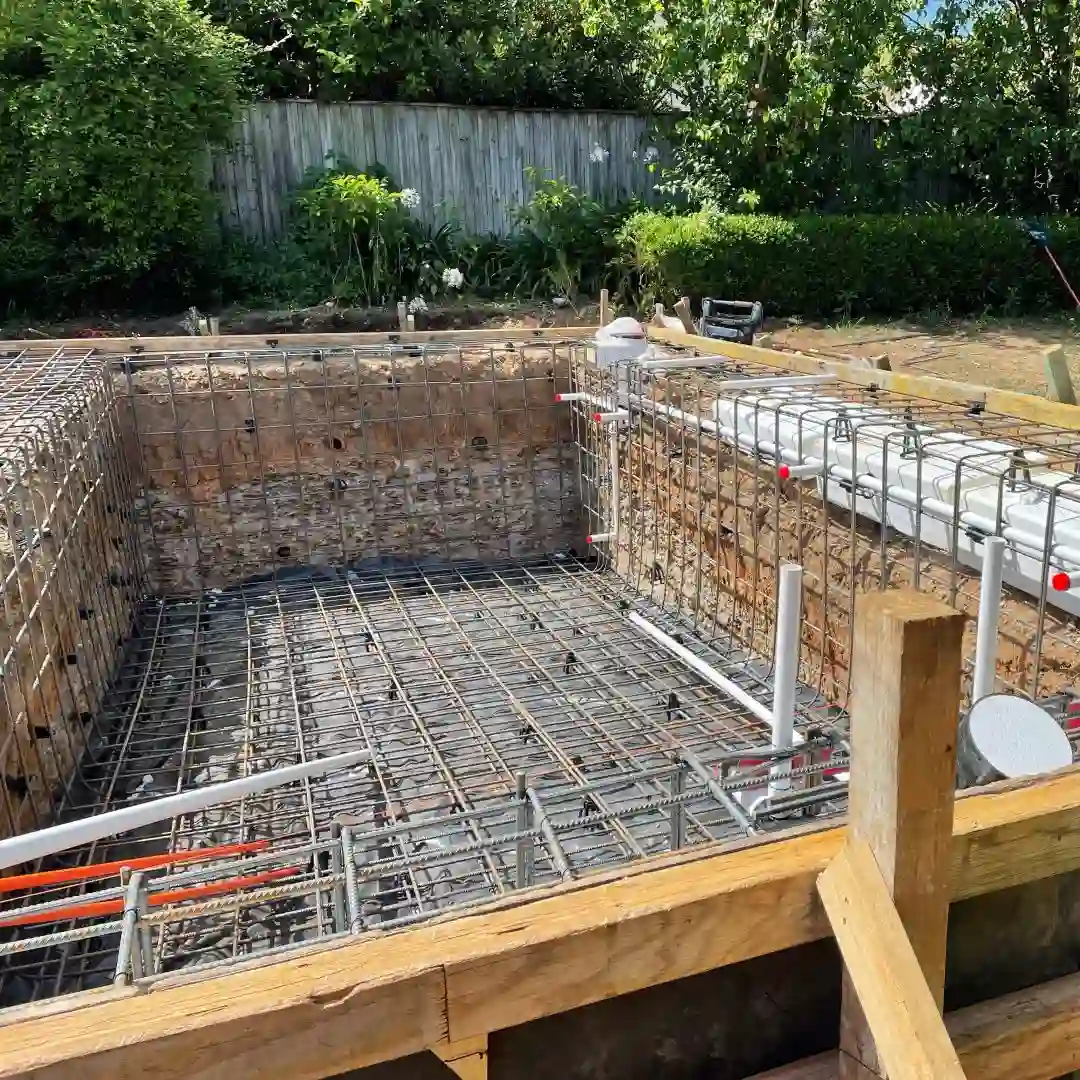
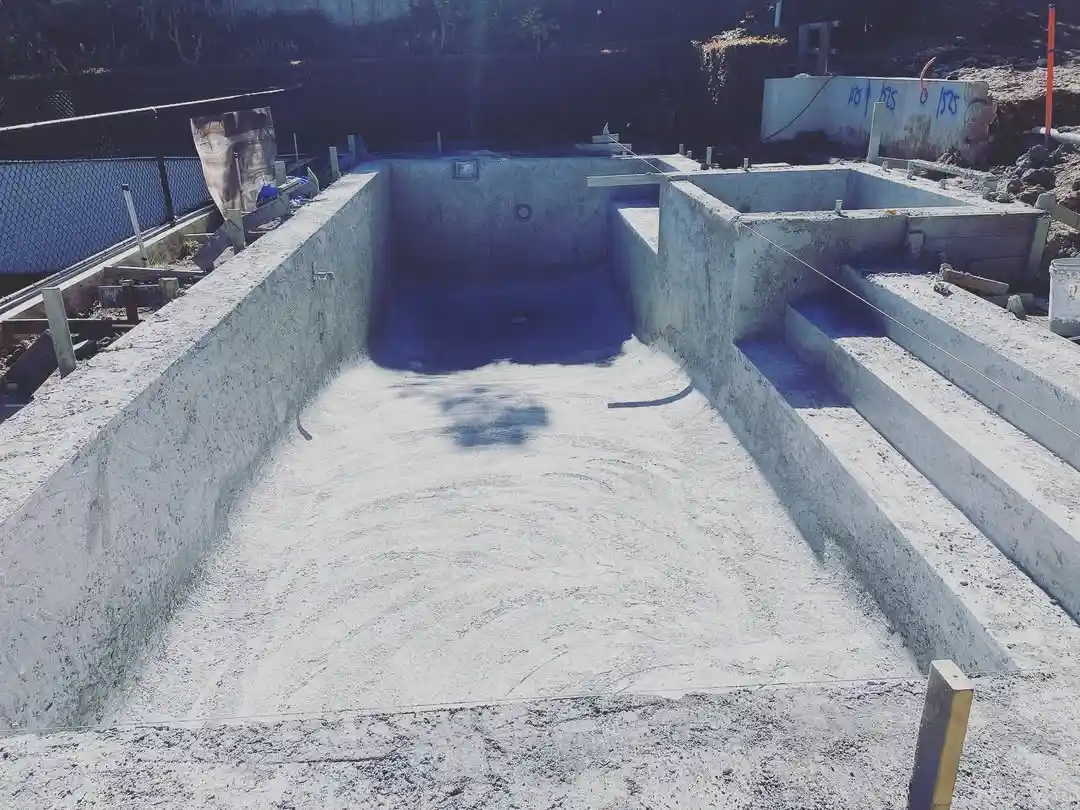
Shotcrete is the stage where every earlier decision either pays off or gets exposed. It goes on after excavation has set the shape of the hole — including any adjustments made for rock or sandstone conditions — and after formwork and steel fixing and plumbing have been locked into place. If any of those earlier stages were rushed or poorly coordinated, no shotcrete method will fully compensate for it. It’s part of why we run shotcrete application as one stage in a coordinated sequence rather than as an isolated job handed between disconnected contractors.
Our step-by-step pool construction process guide covers how these stages connect from design through to finishing, and our article on what really affects concrete pool cost in Sydney explains where shotcrete sits in the overall budget.
FAQs
Is gunite better than shotcrete for a pool shell?
Neither is inherently better. Gunite is the older trademarked name for what’s now generally called dry-mix shotcrete, and both dry-mix and wet-mix shotcrete can produce a strong, code-compliant pool shell when the mix design, application, and curing are done correctly. What matters more than the label is whether the crew applying it controls thickness, compaction and cover consistently across the whole shell.
What's the real difference between wet-mix and dry-mix shotcrete?
In dry-mix shotcrete, dry materials are conveyed through the hose and water is added at the nozzle, giving the nozzle operator instant control over water content. In wet-mix shotcrete, the concrete is fully mixed before it’s pumped to the nozzle and propelled by compressed air. Wet-mix generally produces less rebound and waste and suits placing larger, continuous volumes, while dry-mix allows more on-the-spot adjustment, which can suit smaller or more complex sections.
Why does my pool shell need such a strict crack width limit?
Aquatic structural standards such as AS 2783 limit crack widths in pool shells to around 0.2mm to protect the steel reinforcement inside the concrete from water ingress and corrosion. Sydney’s seasonal temperature swings put real thermal stress on a pool shell, so tight crack control isn’t a cosmetic preference, it’s what keeps the structure watertight and durable over decades.
Does the shotcrete method affect how long curing takes?
Curing time is driven mainly by the concrete mix design and weather conditions rather than whether it was applied wet-mix or dry-mix. As a general guide, a shotcrete pool shell needs several days of initial curing before further trade work begins, and continues gaining strength for weeks afterward, which is why a rushed schedule at this stage is a genuine risk to the shell’s long-term strength.
Should I ask my pool contractor which shotcrete method they use?
Yes. It’s a reasonable question, and a contractor with real structural experience should be able to explain which method they’re using on your job, why it suits your site’s access and volume, and how they control thickness and cover during application. A vague or dismissive answer to a fair technical question is worth noticing.
Got a Site in Sydney and Need a Straight Answer?
We’ll come out, look at your block, tell you honestly what’s achievable, and put a written quote in your hands within 24 hours. No obligation, no phone-quote guesswork.