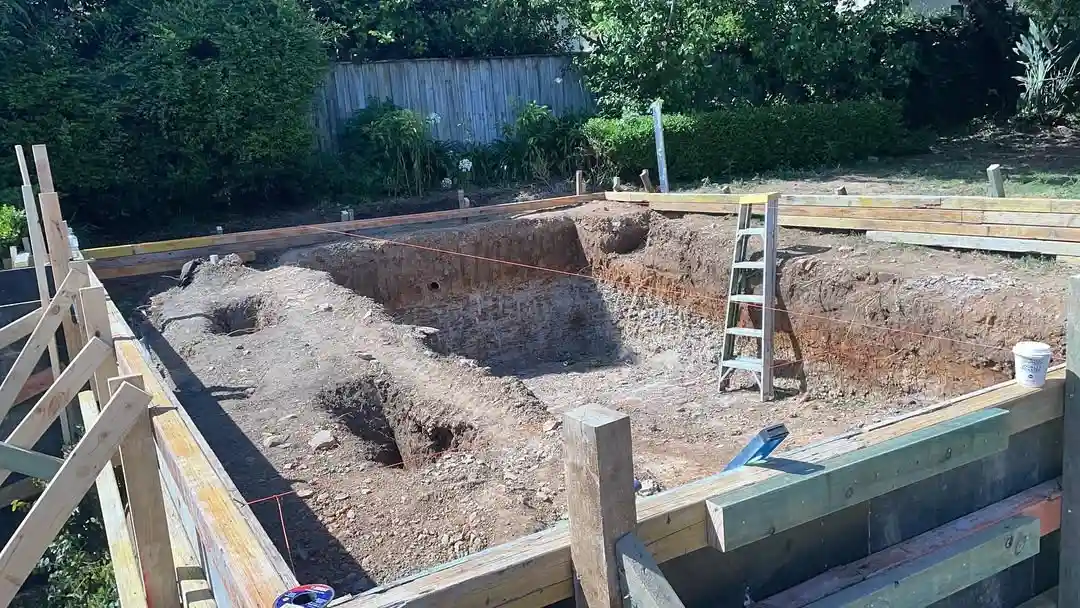
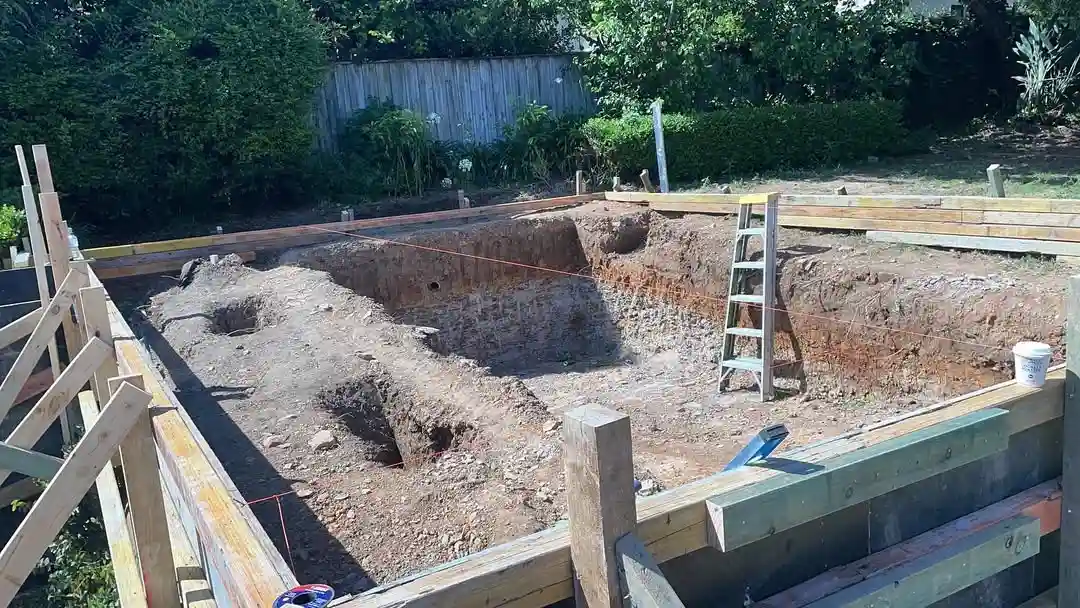
Sydney is built on sandstone. For pool excavation, that single fact of geology explains more about your final price and timeline than almost anything in the brochure. Here’s what’s actually going on underground — and how to plan for it before you sign a contract.
If you’ve priced a concrete pool in Sydney and the first two quotes came in tens of thousands of dollars apart, the ground under your lawn is very likely the reason. Excavation is the stage of a pool build where the biggest surprises happen — not because contractors are hiding costs, but because nobody can see through soil until the excavator starts digging. And in Sydney, what’s under that soil is very often rock.
We’ve covered what really affects concrete pool cost in Sydney in general terms before, and briefly touched on soil type as one variable among many. This article goes deeper into the one factor that causes the widest swing between an accurate quote and a painful variation invoice: rock and sandstone excavation.
Why Sydney pools hit rock more than most cities
Most of the Sydney basin sits on a formation geologists call Hawkesbury Sandstone — the same rock that shaped Sydney Harbour’s cliffs and the sculpted gorges of the Blue Mountains. It’s genuinely hard stone, with a compressive strength that’s been measured up to around 70 megapascals in places, which is strong enough that it was quarried by hand for more than a century to build much of colonial Sydney. According to the broader Sydney Basin geology, this sandstone sits above older shale layers, and across large parts of the metro area it lies remarkably close to the surface — sometimes within a metre or two of natural ground level.
That’s the detail that matters for a swimming pool. A typical residential shell needs to sit somewhere between 1.5 and 2.2 metres below ground, depending on the design. On a sandstone-affected block, that depth range is exactly where the rock starts. It’s also why builders across the region talk about “rock” almost the way other cities talk about weather — it’s a constant, site-specific variable that no two blocks share equally, even on the same street.
The short version: a standard dig moves soil with a bucket. A rock dig has to break the material apart first, usually with a hydraulic hammer attachment, before it can be moved at all. That single difference is where most of the cost and time variance comes from.
How rock actually changes the excavation cost
When our crews scope a pool excavation in a sandstone-prone area, we’re pricing several things that don’t apply on a clean soil site:
- Machinery and method. Rock generally needs a hydraulic rock breaker attachment rather than a standard bucket, and in denser rock, specialised rock-sawing or splitting equipment. This equipment costs more to run and moves material far more slowly than a standard dig.
- Time on site. Breaking rock is measured in hours per cubic metre, not minutes. A pool footprint that would take a day and a half in clean soil can stretch to four or five days once real rock is encountered.
- Spoil removal. Broken sandstone is heavier and bulkier than excavated soil, and many tip sites charge more to accept rock spoil than clean fill. Truck movements typically increase as well, since rock doesn’t compact into a load the way soil does.
- Shape and depth changes. Where rock is extensive, an engineer may adjust footing or wall design to work with the rock profile rather than against it, which can affect the formwork and steel scope that follows.
- Access. Rock excavation on a tight suburban block, especially where a breaker needs to work close to a boundary fence or an existing structure, takes longer again due to vibration and clearance limits.
None of this means rock excavation is unaffordable — the vast majority of Sydney pools get built successfully on rock-affected blocks every year, including plenty of ours. It means the cost of excavation on a sandstone site is a genuine variable that should be priced against your specific block, not against a generic “average pool” figure pulled from a display home.
| Ground condition | Typical excavation method | Relative cost & time impact |
|---|---|---|
| Clean soil, no rock | Standard excavator bucket | Baseline — fastest and most predictable |
| Reactive clay / shale (common further west) | Standard bucket, possible extra shoring or drainage | Slightly above baseline, driven more by moisture management than hardness |
| Partial sandstone bands | Bucket plus hydraulic breaker for isolated sections | Moderate increase, concentrated in the rock zones only |
| Solid sandstone shelf | Hydraulic breaker throughout, possible rock-sawing | Largest increase in both time and cost across the whole excavation |
Exact rates vary by contractor, block access, and how deep the rock sits, which is why we don’t publish a flat “rock rate” — anyone who does is usually estimating, not measuring. A proper quote prices your site, not a national average.
Which Sydney areas are more likely to hit rock
Ground conditions vary block to block, so this is a general pattern rather than a guarantee, but geology across the Sydney basin does follow some broad regional trends worth knowing before you budget:
- Northern Beaches — suburbs like Manly, Mona Vale and Avalon commonly sit on exposed or shallow sandstone, particularly on elevated or coastal blocks.
- North Shore — areas such as Chatswood, Hornsby, Turramurra and the wider Ku-ring-gai area often sit on sandstone ridgelines, with rock frequently appearing within excavation depth.
- Hills District — parts of Castle Hill and Baulkham Hills sit on sandstone-influenced terrain, though conditions here are more mixed than the North Shore.
- Sutherland Shire — Sutherland, Menai and Engadine sit on the sandstone plateau south of the harbour and regularly encounter rock during excavation.
- Western Sydney / Cumberland Plain — suburbs further west, such as Penrith and Liverpool, are more often affected by shale-derived reactive clay than solid rock. This brings a different cost driver — moisture and soil movement rather than breaking hard stone — but it’s still a ground-condition cost that a generic quote can miss.
The only way to know for certain is a site-specific assessment. Regional pattern is a useful heads-up, not a substitute for looking at your actual block.
How to spot rock risk before you dig
You don’t need a mining engineer to get a reasonable read on your risk before excavation starts. A few practical checks go a long way:
- Ask for a geotechnical or soil report. If your build already needed one for council approval, it will usually flag rock, groundwater, or reactive clay findings. If you don’t have one, a targeted test hole or borehole log for the pool footprint specifically is worth the cost.
- Look at what’s already exposed. Sandstone outcrops in garden beds, retaining walls that appear to be cut into natural rock, or exposed rock faces on a sloping block are strong visual clues.
- Ask neighbours or your builder. If a house two doors down hit rock during its footings or a pool dig, there’s a reasonable chance your block shares similar geology.
- Check topsoil depth. Very shallow topsoil before hitting a harder layer, even at 300–600mm, is often an early indicator of rock closer to the surface than average.
- Request a pre-start site visit. This is the single most reliable step. An experienced excavation crew can often make a reasonable assessment from visible cues, block history in the area, and test digging before committing to a fixed price.
What a properly scoped quote should include
Whoever you engage for excavation, a quote that takes ground conditions seriously should read differently to one that doesn’t. Look for:
- A clear statement of what ground condition the price assumes (for example, “based on standard soil, no significant rock encountered”).
- A stated rate or allowance for rock excavation if encountered — ideally per cubic metre or per hour of breaker time — rather than an open-ended “to be quoted on the day” clause with no reference point.
- Reference to a soil report or site inspection, not a flat figure applied regardless of the block.
- Clarity on spoil removal and tipping costs, since rock spoil is frequently charged differently to clean soil at the tip.
- A sensible process for what happens if rock is found: who inspects it, how it’s measured, and how the variation is approved before work continues.
Red flag to watch for: a quote with no mention of ground conditions at all, on a build where a soil report hasn’t been done. That’s not a lower price — it’s an unpriced risk that lands on you later as a variation.
How this fits into the rest of the build
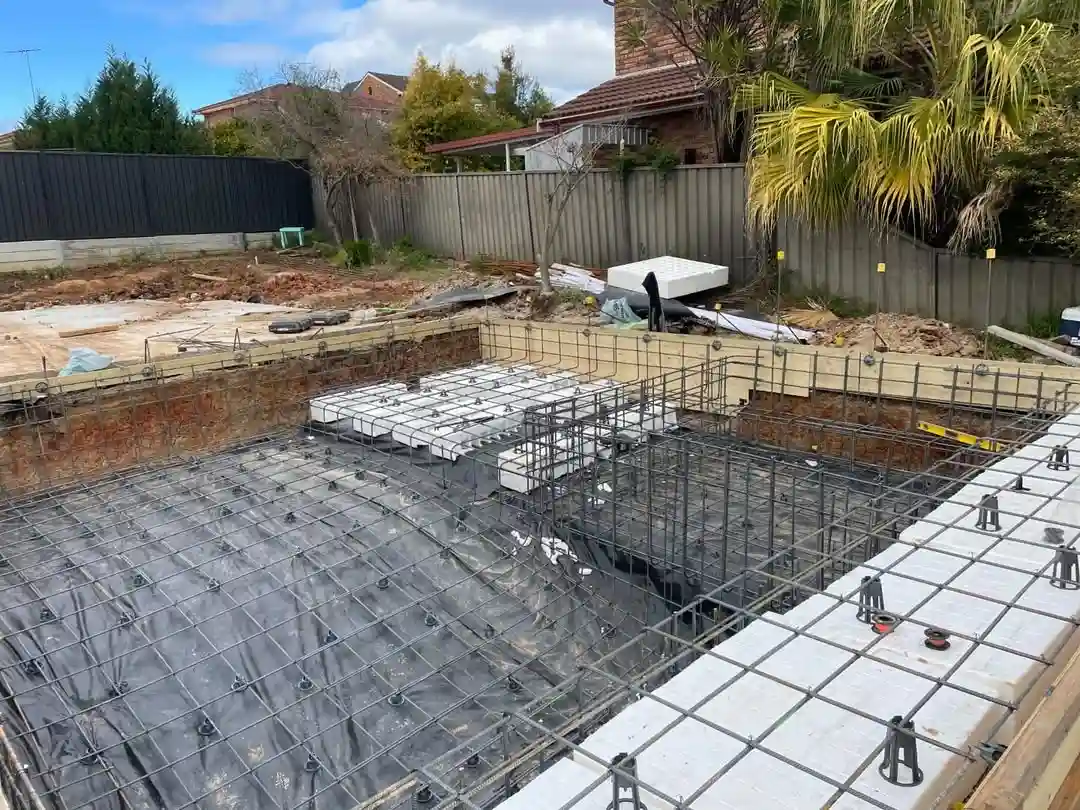
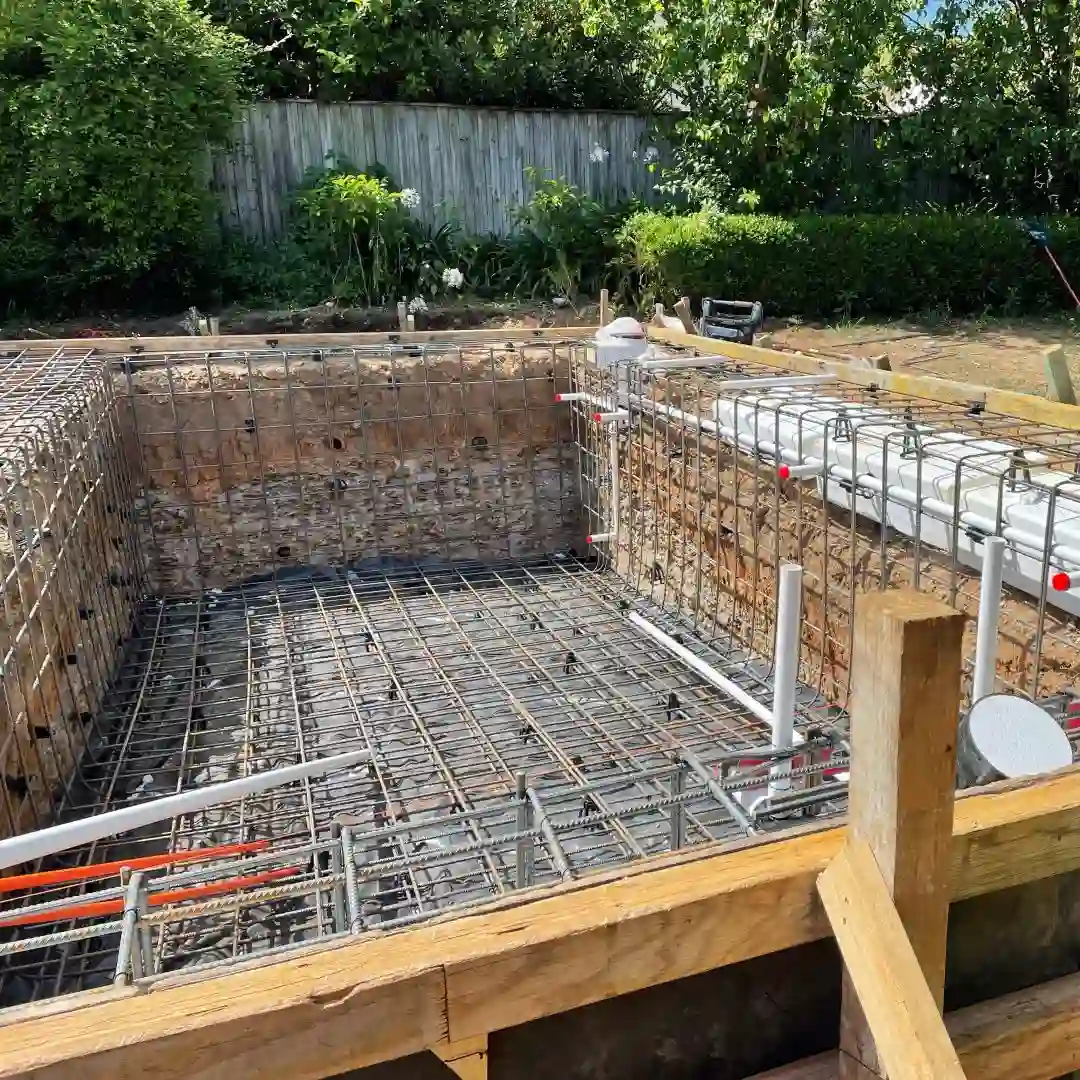
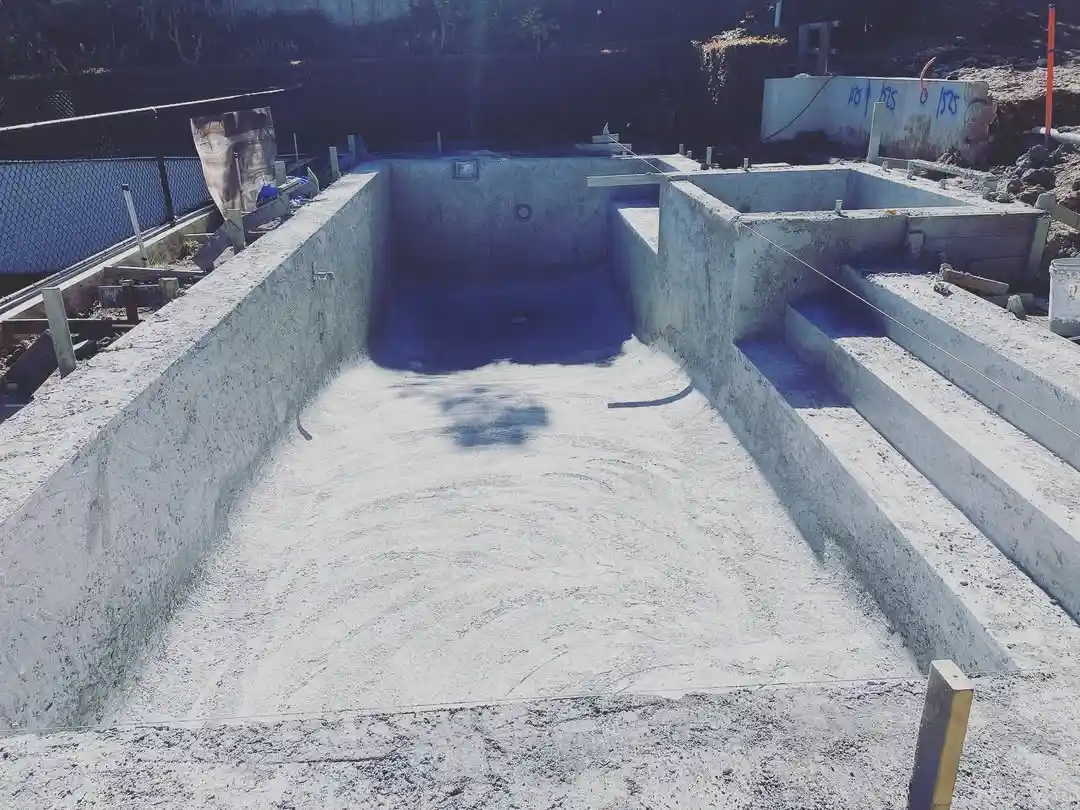
Excavation isn’t an isolated task — how it’s handled sets up every stage that follows. Where rock is present, an engineer may adjust the shell design slightly to work with the rock profile, which then feeds directly into pool formwork and steel fixing, the pool plumbing layout around penetrations, and finally the shotcrete application that forms the finished shell. That’s part of why we scope and run these four stages as one coordinated build rather than handing a site between separate, unconnected contractors — a rock-affected excavation that isn’t communicated clearly to the next trade is exactly the kind of gap that causes delays and rework further down the line.
If you haven’t seen it yet, our step-by-step pool construction process guide walks through how excavation connects to each of those later stages, and our piece on steel reinforcement tolerances covers why precision at the formwork stage matters just as much once the shell shape is set.
FAQs
How do I know if my Sydney block has rock before I dig?
A properly built concrete pool can last the life of the home — 50 years or more with periodic resurfacing. Fibreglass shells are generally quoted at 25–30 years before the gelcoat needs significant attention. The structural shell of a concrete pool does not have an expiry date the way a moulded fibreglass shell does.
Does rock excavation always cost more than a standard dig?
Upfront, yes — concrete pools typically cost more than a standard fibreglass installation of similar size because the build is custom and labour-intensive. However, the comparison shifts significantly when you factor in Sydney’s site conditions: rock excavation, restricted access, and reactive clay often make concrete the only viable option regardless of preference, and these site-specific costs affect fibreglass quotes too.
Which Sydney areas are most likely to hit sandstone during pool excavation?
Not always. Fibreglass shells arrive as one pre-moulded unit and require crane or truck access wide enough to manoeuvre the shell into position. Blocks with narrow side access, significant slope, sandstone rock, or boundary restrictions frequently rule out fibreglass on practical grounds — before design preference is even a factor.
Can a pool quote include an allowance for rock excavation?
Yes, in terms of daily and weekly upkeep. Concrete surfaces are more porous, which means more brushing and marginally higher chemical use to manage algae. Modern finishes like glass bead and quartz have reduced this considerably. Fibreglass is genuinely easier to clean day-to-day — that’s a real difference, not marketing.
Does hitting rock delay the rest of the pool build?
The structural stages — excavation, steel formwork, plumbing, and shotcrete curing — typically run 8 to 14 weeks depending on site conditions, rock, and weather. Council approval timelines and surface finishing stages add to that. Fibreglass installation is significantly faster once the shell arrives, but that speed comes at the cost of design flexibility.
Got a Site in Sydney and Need a Straight Answer?
We’ll come out, look at your block, tell you honestly what’s achievable, and put a written quote in your hands within 24 hours. No obligation, no phone-quote guesswork.