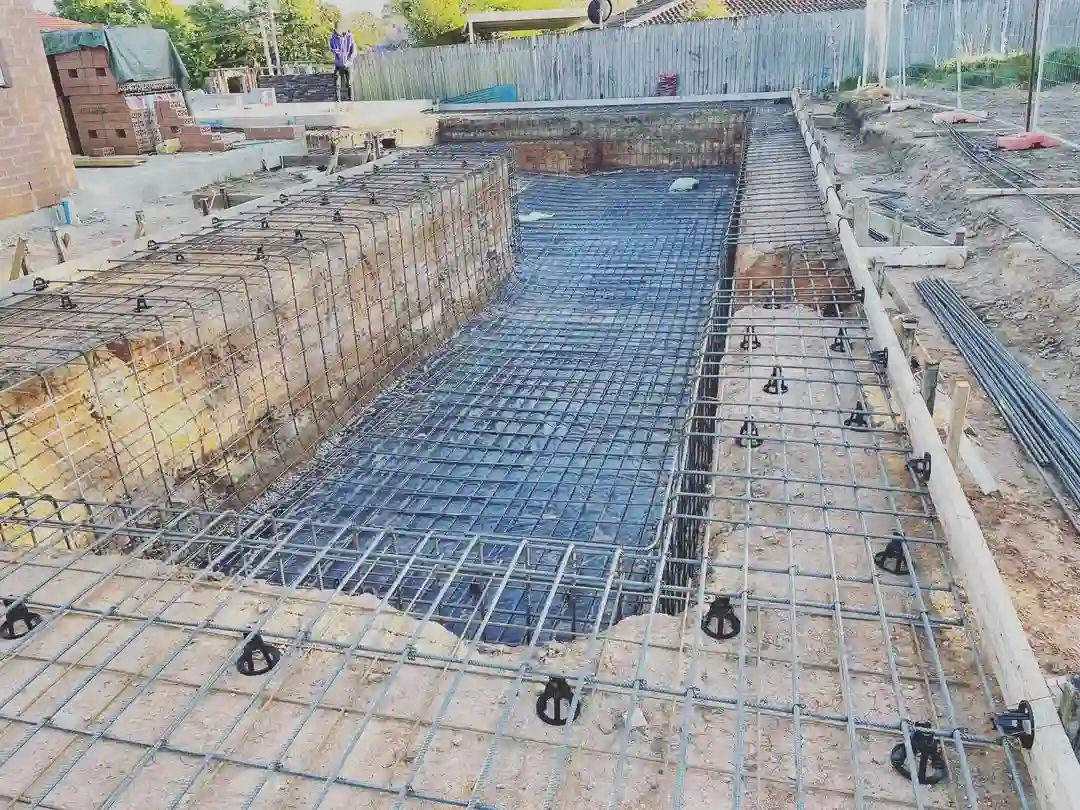
Let’s get one thing out of the way immediately: we only build concrete pools. We do the excavation, the steel formwork and fixing, the plumbing rough-in, and the shotcrete shell — four stages, done properly, nothing else. So if you’re waiting for us to tell you fibreglass is rubbish and concrete is the only sensible choice, that’s not what this article is. We’d rather give you the genuine comparison, because when the right person ends up with the right pool, that’s a better outcome for everyone.
That said — if you’re building on a Sydney block with challenging access, sandstone, reactive clay, or a design that doesn’t fit in a mould, there are things you need to know about how each type performs in the real conditions of this city. Let’s get into it.
How Each Type Is Actually Built
How a concrete pool is built
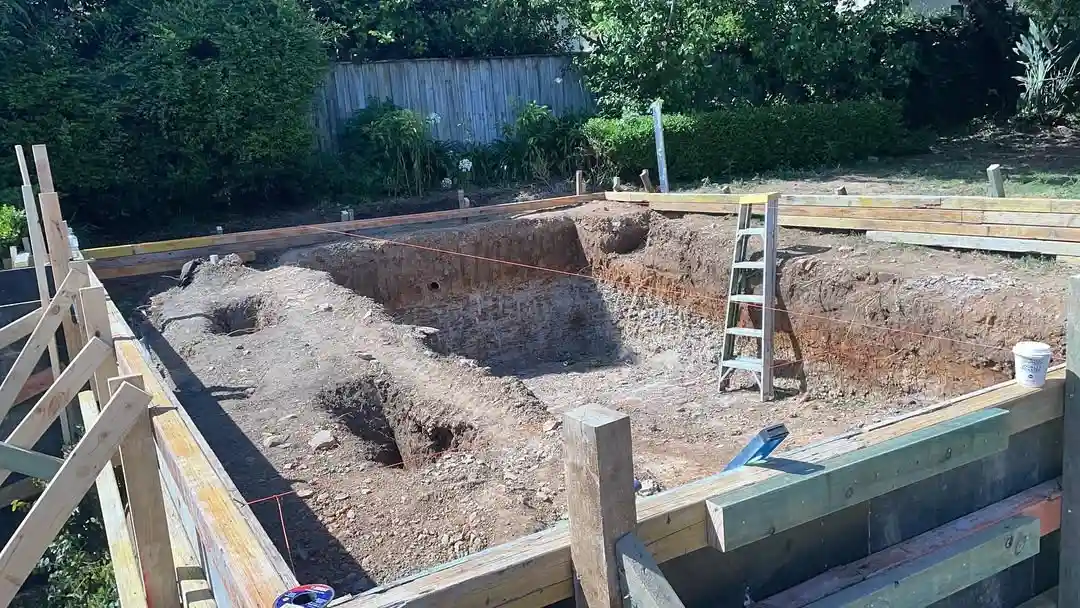
A concrete pool is built entirely on your block, from scratch, to a custom design. The structural build sequence looks like this:Pool excavation
The pool footprint is excavated to the engineer-specified depth and profile. In Sydney, this stage is where conditions can get interesting — sandstone, reactive clay, and restricted site access all affect how long excavation takes and what equipment is needed. We’ve covered this in detail in our pool excavation Sydney guide.
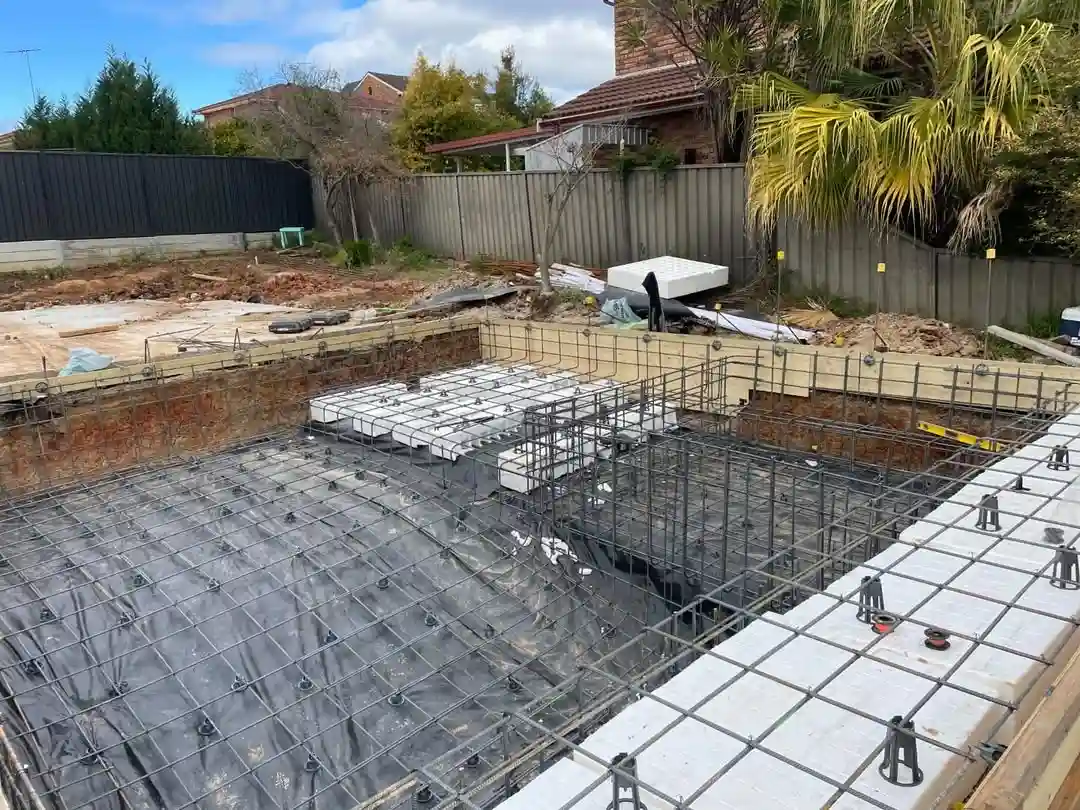
Steel formwork and fixing
A structural steel reinforcement cage is built inside the excavation, tied to an engineer’s specification for bar size, spacing, and concrete cover. This is what gives the shell its structural strength — concrete alone doesn’t hold hydrostatic pressure, the steel does.
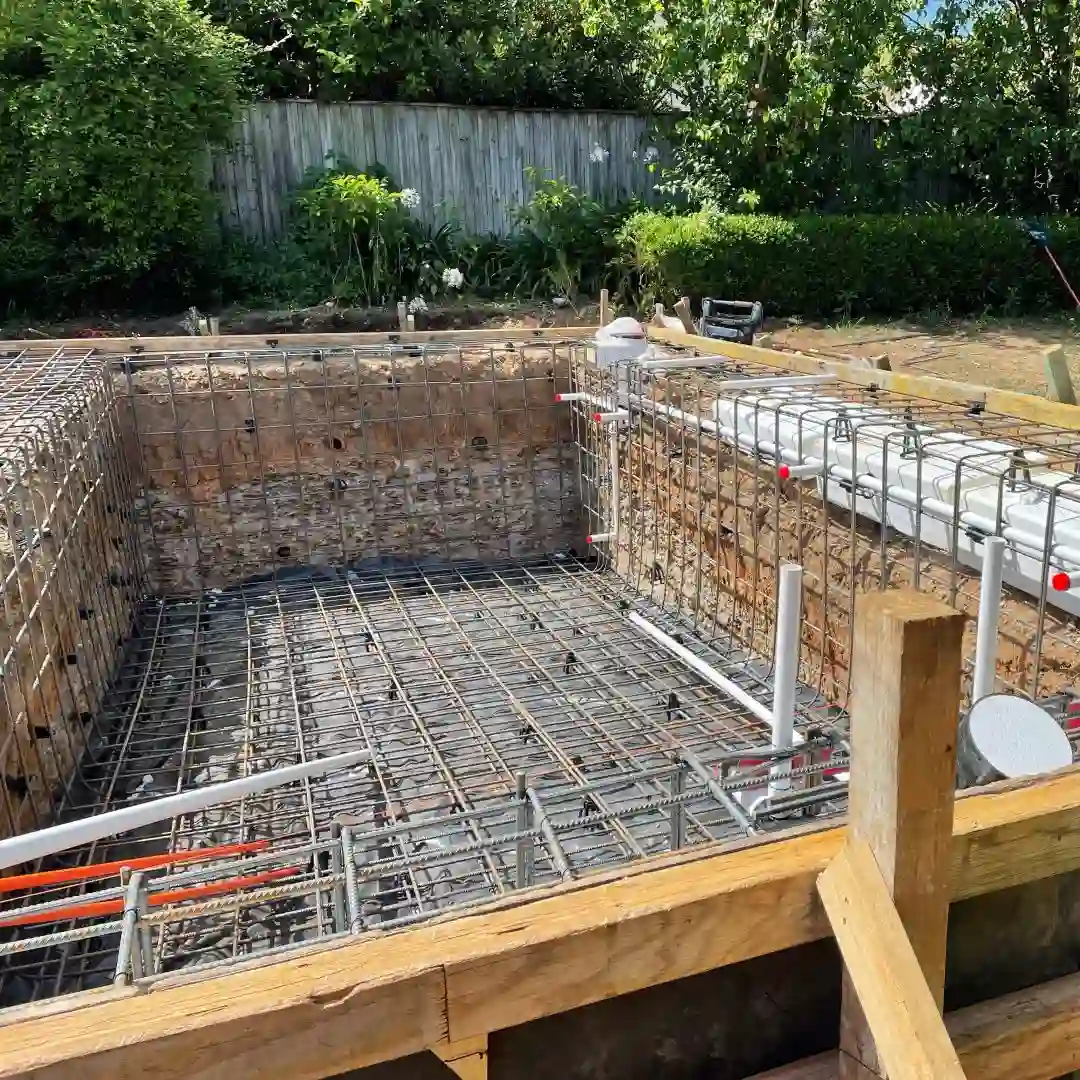
Pool plumbing rough-in
All plumbing pipes — main drain, suction lines, return lines, equipment connections — are installed through the steel framework and pressure-tested before concrete is applied. Every pipe that passes through the shell is permanently encased once the shotcrete goes on.
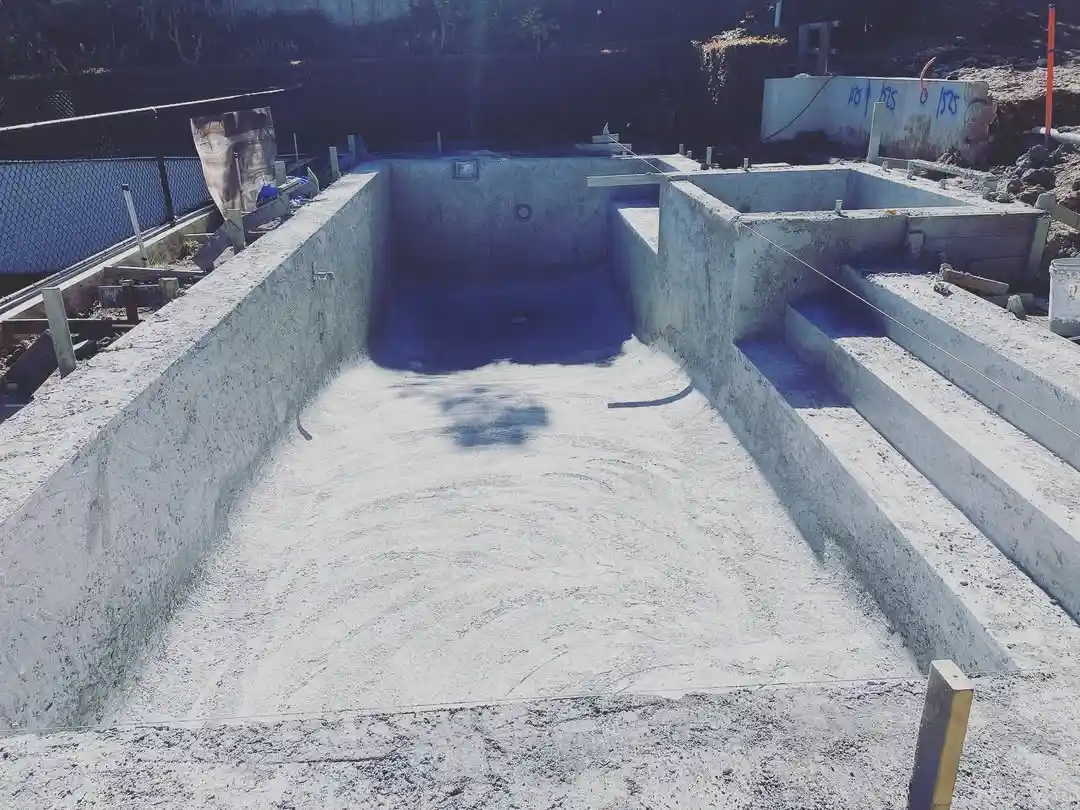
Shotcrete application and curing
Pre-mixed concrete is pneumatically projected through a hose at high velocity onto the steel framework, forming the pool shell. The shell then cures over a minimum of seven days — the period where concrete reaches its design strength. Surface finishes (pebblecrete, tiles, glass bead) and equipment commissioning follow.
How a fibreglass pool is installed
A fibreglass pool shell is manufactured off-site — in a factory, in a mould — and delivered to your property as a finished unit. The installation involves excavating to roughly the right shape, lowering the pre-moulded shell into position with a crane, backfilling around it, and connecting the plumbing and filtration equipment. From excavation to water in the pool, a straightforward fibreglass installation can be done in days, not months.The fundamental difference: A fibreglass pool is a manufactured product. A concrete pool is a bespoke structure built specifically for your site. Everything else in this comparison flows from that distinction.
Head-to-Head: The Key Differences
| Factor | Concrete Pool | Fibreglass Pool |
|---|---|---|
| Construction method | Built on-site, custom to your design | Pre-moulded shell delivered and installed |
| Design flexibility | Unlimited — any shape, size, depth, feature | Limited to available mould sizes and shapes |
| Build time | 8–16 weeks for structural stages | Days for shell install (weeks total with approvals) |
| Upfront cost | Higher — custom labour-intensive build | Generally lower for standard shapes |
| Structural lifespan | 50+ years with correct construction | 25–30 years before major gelcoat or shell work |
| Surface maintenance | More brushing and chemical management needed | Smooth gelcoat surface, less algae build-up |
| Difficult site access | Can be built regardless of access, slope, or rock | Shell delivery requires wide, clear crane access |
| Rock or sandstone sites | Excavation can handle any ground condition | May not be possible if excavation profile is irregular |
| Future modifications | Can be extended, deepened, or altered structurally | Shape is fixed — limited modification options |
| Property value impact | Custom concrete pools typically add more to Sydney property values | Adds value but perceived as lower-end by some buyers |
The Sydney Factor — Why Your Suburb Matters
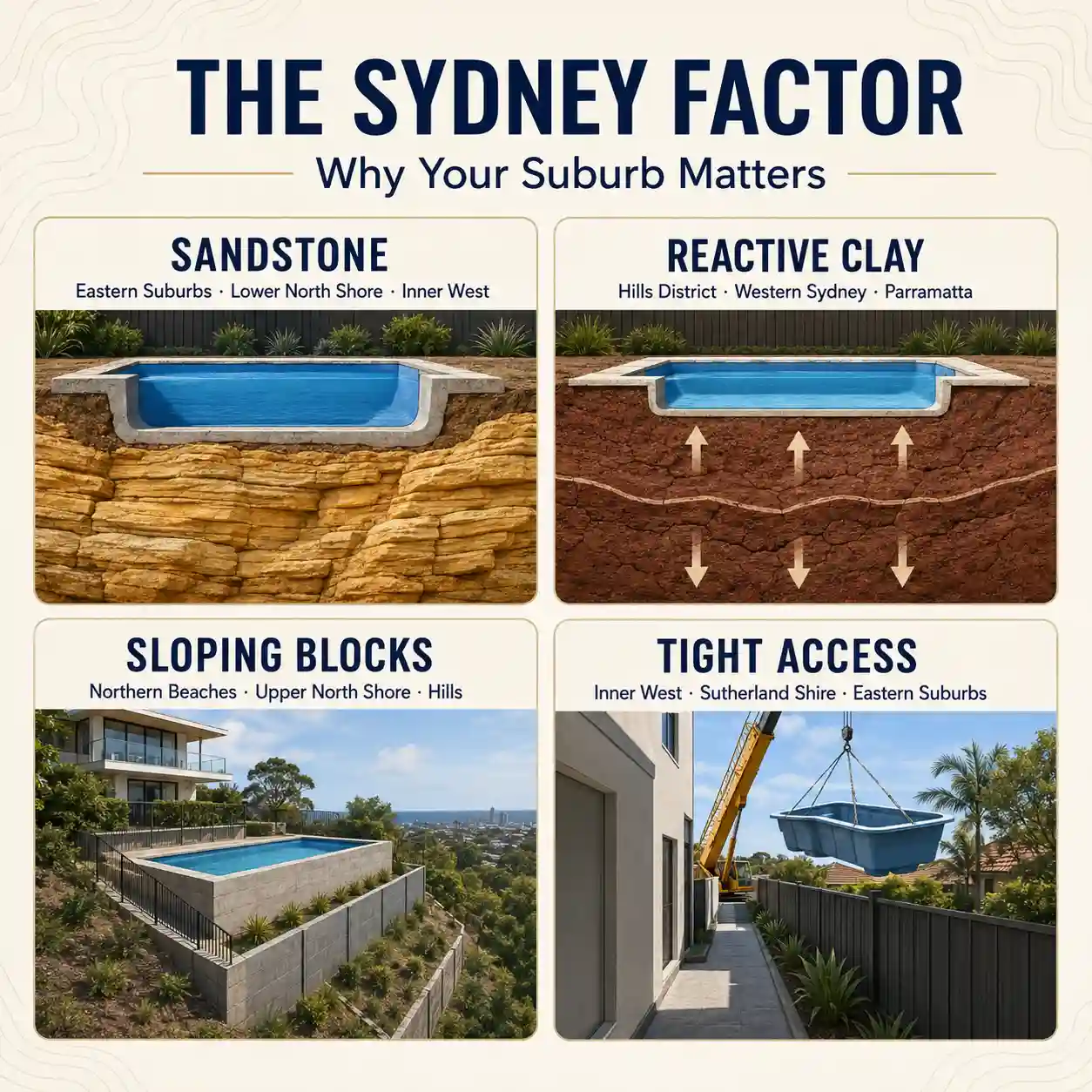
Sydney isn’t a flat, homogeneous city with a uniform soil type. What’s under the ground in Mosman looks nothing like what’s under a block in Kellyville or Sutherland. And this matters — a lot — when you’re choosing between concrete and fibreglass.
Sandstone (Eastern Suburbs, Lower North Shore, Inner West)
Much of Sydney’s harbourside and eastern suburbs sit on sandstone that can appear very close to the surface. Rock excavation is common in suburbs like Bondi, Woollahra, Balmain, Coogee, and Manly. Fibreglass shells need a clean, regular excavation profile to bed evenly — rocky, irregular profiles complicate this significantly. Concrete pools are formed over whatever the excavation reveals. The rock is removed and the shell is built to fit. This is one of the most common reasons Sydney homeowners who started out considering fibreglass end up with concrete.
Reactive clay (Hills District, Western Sydney, Parramatta)
Clay soil expands when wet and shrinks when dry. That seasonal movement puts stress on whatever’s buried in it. A correctly engineered concrete pool shell — with a structural steel cage sized for the site’s soil classification — is designed to resist that movement. Fibreglass shells can flex, which sounds like an advantage, but on highly reactive clay sites, the flex can be enough to distort the shell over time and cause cracking in the surrounding pavement or coping.
Sloping blocks (Northern Beaches, Upper North Shore, Hills)
Fibreglass pool installation assumes reasonably level access and a standard excavation depth. Significantly sloped blocks often require retaining structures, deeper excavation on the downhill side, and crane positioning that may not be achievable from the street. Concrete pools are built on site — the formwork and steel work around the slope, not against it.
Tight access (Inner West, Sutherland Shire, Eastern Suburbs)
A fibreglass shell is a large, rigid unit. Getting it from the delivery truck into the backyard requires clear access — usually a minimum gate or side passage width — and crane reach. Blocks with narrow passages, overhead obstructions, or limited street parking for a crane truck sometimes make fibreglass installation impossible before design preference is even on the table.
Worth checking early: Before you compare concrete and fibreglass on price or aesthetics, find out whether your block physically allows both options. A site assessment — not a brochure or a quote by phone — is the only way to know for certain. We visit every site before quoting.
Design Freedom and Customisation
This is where concrete pools have an undeniable and significant advantage. A concrete pool can be built in any shape, any size, and any depth. Freeform, geometric, L-shaped, infinity edge, integrated spa, beach entry, tanning ledge, wading shelf — none of these require a mould to exist first. The pool is formed on site and can incorporate any design the engineer and builder can safely execute.
Fibreglass pools are available in a range of shapes and sizes, and the range has improved considerably in recent years. But they are still moulded products. The mould determines the maximum dimensions and the shape. If your design doesn’t match an available mould, it doesn’t get built in fibreglass. Full stop.
For most homeowners with a standard rectangular or kidney-shaped pool in a standard size, fibreglass offers enough design flexibility. For homeowners with a specific vision, an unusual block shape, or a design that incorporates architectural elements of the house, concrete is the only option that starts with a blank page.
Long-Term Durability and Lifespan
A properly built and correctly cured concrete pool shell — reinforced steel, adequate concrete cover, properly managed water chemistry — will outlast almost anything else you build on your property. The shell doesn’t have an expiry date. It can be resurfaced and refinished as surface finishes wear over time (typically every 10–20 years depending on the finish), but the structure underneath stays.
Fibreglass gelcoat surfaces are smooth and algae-resistant, but they do age. UV exposure and pool chemistry degrade the gelcoat over time, and osmotic blistering — where water penetrates the gelcoat and causes bubbling — has been a documented issue in older fibreglass shells, although modern manufacturing has reduced this significantly.
The structural comparison over a 50-year ownership is genuinely in concrete’s favour. The surface maintenance comparison — how much brushing, chemical management, and cleaning is required year to year — is in fibreglass’s favour, particularly in the early years.
Maintenance: What Actually Changes Day to Day
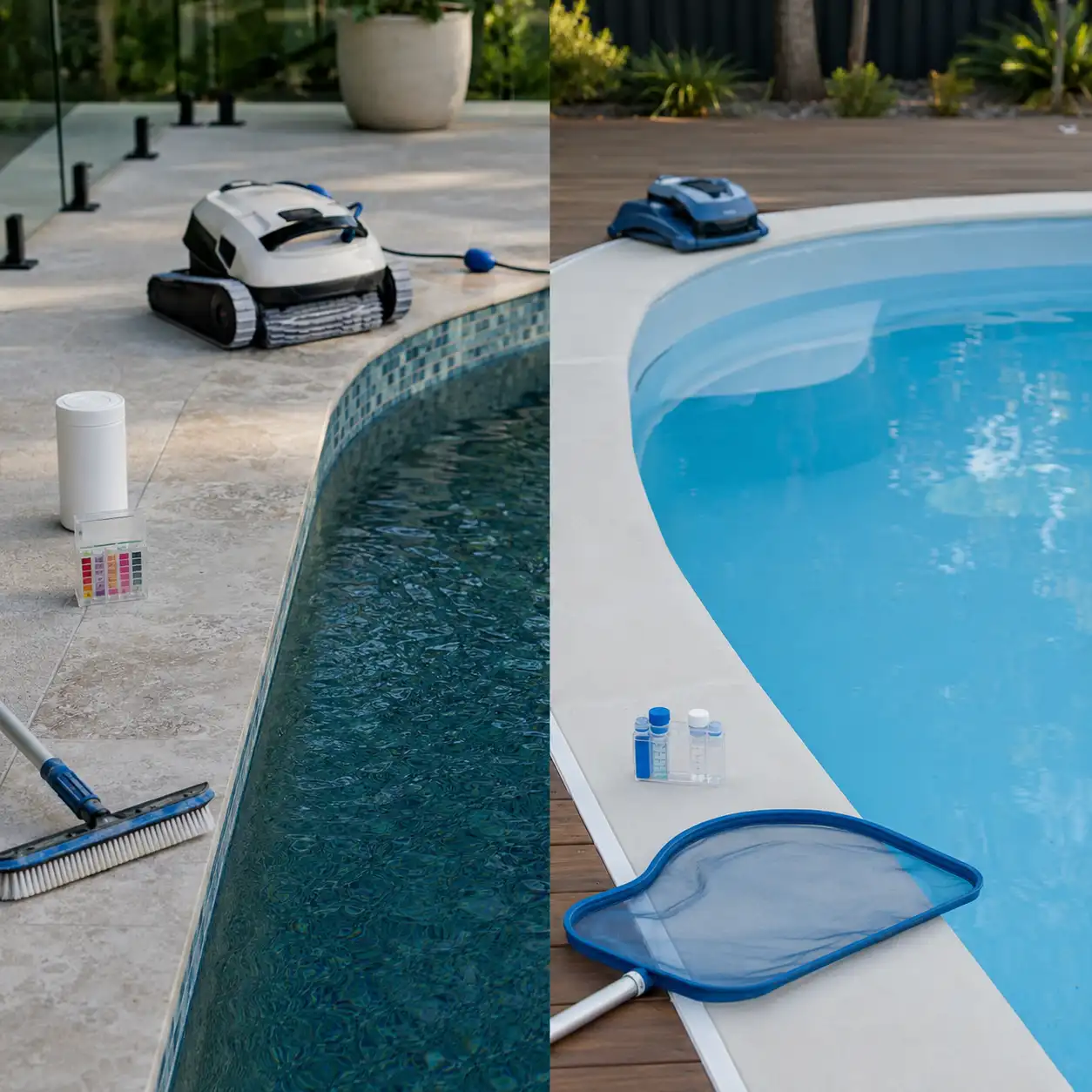
Be honest about this one with yourself before you choose. Concrete pools require more regular brushing — the surface is more porous than fibreglass gelcoat, which means algae finds more purchase. You’ll typically use more sanitiser and need to brush more frequently. This is a manageable difference for most homeowners, especially with modern concrete surface finishes like glass bead or quartz, which have significantly reduced the porosity compared to older cement render.
Fibreglass is genuinely easier to maintain in the early years. The smooth surface releases algae more easily, uses fewer chemicals, and takes less elbow grease. If low-maintenance is your primary requirement and your site allows fibreglass to be installed, that’s a real argument in its favour — and we’d rather you knew that than hear it only after you’d committed to concrete.
Cost: Upfront vs Lifetime
Concrete pools cost more to build than a standard fibreglass installation of comparable size. The labour is more intensive, the build takes longer, and the material costs are higher. That’s the straightforward part of the comparison.
The fuller picture involves a few other factors that often get left out of the initial comparison:
- Site-specific costs apply to both. Rock excavation, poor access, reactive soil — these drive up the cost of whichever pool type you choose. If rock is going to be blasted regardless, fibreglass’s cost advantage narrows.
- The finish matters for concrete. A basic pebblecrete finish costs less than a premium glass bead or tile finish. Fibreglass pools come with the gelcoat included. Where you land on the finish choice affects how close the total concrete cost is to a fibreglass alternative.
- Longevity changes the comparison. If a concrete pool lasts 50+ years and a fibreglass pool needs significant work at 25–30 years, the per-year cost calculation changes considerably for anyone buying a long-term home.
For a detailed breakdown of what drives concrete pool costs in Sydney, including how each stage contributes to the total, see our concrete pool cost Sydney guide.
Who Should Choose Concrete — and Who Shouldn't
- Want a custom shape, size, or design that doesn’t exist in a mould
- Have a sloped, rocky, or access-restricted block where fibreglass installation isn’t practical
- Are building in an area with sandstone or highly reactive clay
- Plan to stay in the home long-term and want a 50-year structure
- Want to integrate architectural features — infinity edges, spa, beach entry, statement steps
- Are prioritising property value and premium presentation
- Have a flat, accessible block with no rock or access constraints
- Want the fastest possible installation time
- Prefer a lower-maintenance surface day to day
- Are happy with a standard shape from the available mould range
- Have a tighter upfront budget and aren’t planning to stay long-term
- Are buying a home with an existing fibreglass pool you’re simply replacing
Questions to Ask Before You Decide
Whether you’re leaning toward concrete or fibreglass, these are the questions worth getting answered before you commit to anything:
Has a builder physically visited your site — or is the quote based on a photo and a suburb name?
Is fibreglass delivery and crane access confirmed as feasible for your block’s actual gate width and street access?
Has the soil classification been assessed — and has the engineer’s steel specification been designed for that classification?
If rock is likely, has it been accounted for in the quote, or is it a provisional allowance?
Is the builder licensed by NSW Fair Trading for swimming pool construction?
Is the builder a member of SPASA Australia — the Swimming Pool and Spa Association — or another industry body?
What is the curing and finishing timeline after shotcrete is applied — and what warranties apply to the structural shell?
What Sydney Pools Steel Does — and Doesn't Do
We specialise exclusively in the structural construction stages of concrete pools. We do not build fibreglass pools, and we don’t do pool renovations, resurfacing, or repairs. The four services we offer are the four stages that determine whether a concrete pool is built correctly:
Pool Excavation
Site assessment, machinery, rock removal, spoil disposal, and base preparation across all Sydney conditions.
Pool Formwork & Steel Fixing
Engineer-specified rebar cage, correctly tied, covered, and inspected before shotcrete is applied.
Pool Shotcrete
Wet-mix concrete pneumatically applied at high velocity — forming a dense, seamless shell with no cold joints.
Pool Plumbing Rough-In
Pipe installation, pressure testing, and equipment connections — permanently encased before the pour.
All four stages are managed under one team. No handover between subcontractors, no gap between the excavation crew and the steel fixing crew. For the full sequence, see our pool construction process overview.
FAQs
Which lasts longer — a concrete pool or a fibreglass pool?
A properly built concrete pool can last the life of the home — 50 years or more with periodic resurfacing. Fibreglass shells are generally quoted at 25–30 years before the gelcoat needs significant attention. The structural shell of a concrete pool does not have an expiry date the way a moulded fibreglass shell does.
Are concrete pools more expensive than fibreglass in Sydney?
Upfront, yes — concrete pools typically cost more than a standard fibreglass installation of similar size because the build is custom and labour-intensive. However, the comparison shifts significantly when you factor in Sydney’s site conditions: rock excavation, restricted access, and reactive clay often make concrete the only viable option regardless of preference, and these site-specific costs affect fibreglass quotes too.
Can fibreglass pools be installed on any Sydney block?
Not always. Fibreglass shells arrive as one pre-moulded unit and require crane or truck access wide enough to manoeuvre the shell into position. Blocks with narrow side access, significant slope, sandstone rock, or boundary restrictions frequently rule out fibreglass on practical grounds — before design preference is even a factor.
Do concrete pools require more maintenance than fibreglass?
Yes, in terms of daily and weekly upkeep. Concrete surfaces are more porous, which means more brushing and marginally higher chemical use to manage algae. Modern finishes like glass bead and quartz have reduced this considerably. Fibreglass is genuinely easier to clean day-to-day — that’s a real difference, not marketing.
How long does it take to build a concrete pool in Sydney?
The structural stages — excavation, steel formwork, plumbing, and shotcrete curing — typically run 8 to 14 weeks depending on site conditions, rock, and weather. Council approval timelines and surface finishing stages add to that. Fibreglass installation is significantly faster once the shell arrives, but that speed comes at the cost of design flexibility.
Does Sydney Pools Steel build both concrete and fibreglass pools?
No. We specialise exclusively in the structural construction stages of concrete pool builds — excavation, steel formwork and fixing, plumbing rough-in, and shotcrete. We don’t install fibreglass shells, and we don’t do repairs or renovations. Four services, done properly, nothing else.
Got a Site in Sydney and Need a Straight Answer?
We’ll come out, look at your block, tell you honestly what’s achievable, and put a written quote in your hands within 24 hours. No obligation, no phone-quote guesswork.