Introduction: The Invisible Strength of Your Backyard Oasis
When it comes to pool steel reinforcement in Sydney, the difference between a concrete shell that lasts 30 years and one that cracks within a decade comes down to decisions made before a single litre of shotcrete is applied.
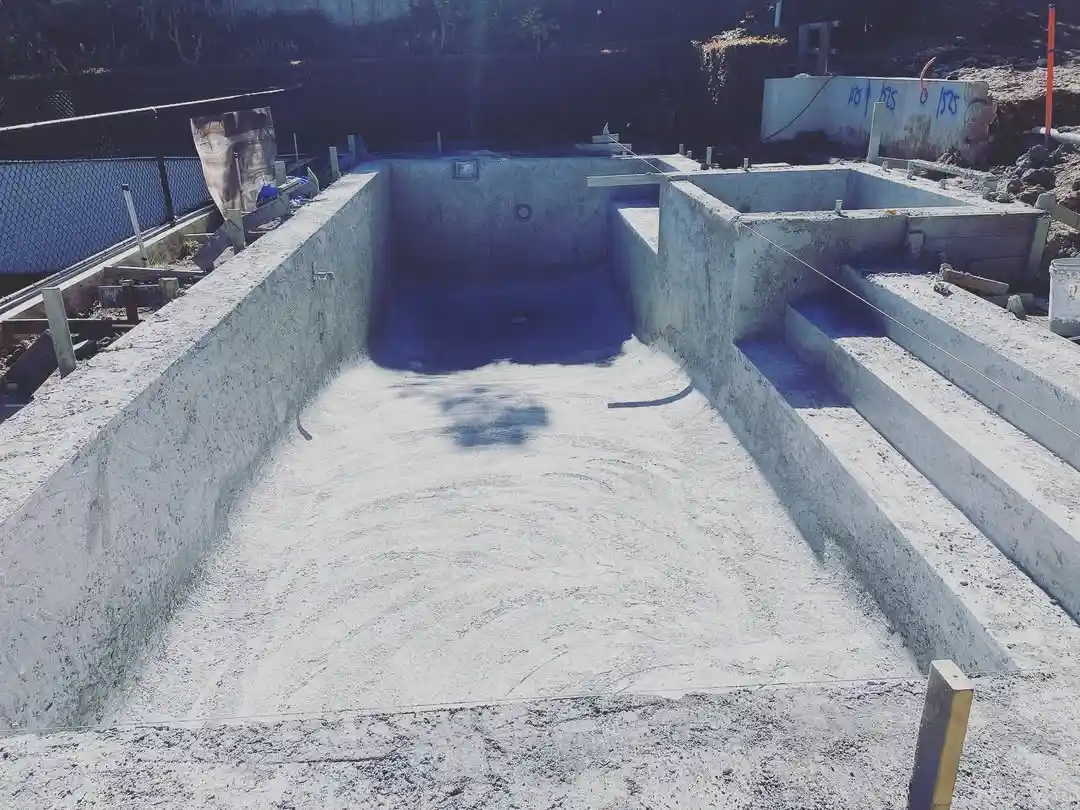
The shimmering tile and infinity edges are merely the skin; the true hero is the “skeleton” beneath. A pool is a massive vessel under constant duress. While shotcrete—which must reach a minimum compressive strength of 28 MPa for serviceability—handles the weight and “squeezing” forces of compression, it is fundamentally weak in tension. Without a precisely engineered rebar skeleton to handle the “pulling” and flexing forces, a pool is little more than a plain concrete cantilever destined to fail under the weight of its own ambition.
The 0.2mm Rule: Why “Good Enough” Concrete Fails
In residential construction, a hairline crack in a driveway is a minor cosmetic nuisance. In a concrete pool shell in Sydney, it is a structural failure.. In a pool, it is a structural failure. To maintain water-tightness and prevent the corrosion of the internal steel, aquatic engineering standards (such as AS 2783) mandate that cracks be limited to a maximum width of just 0.2mm.
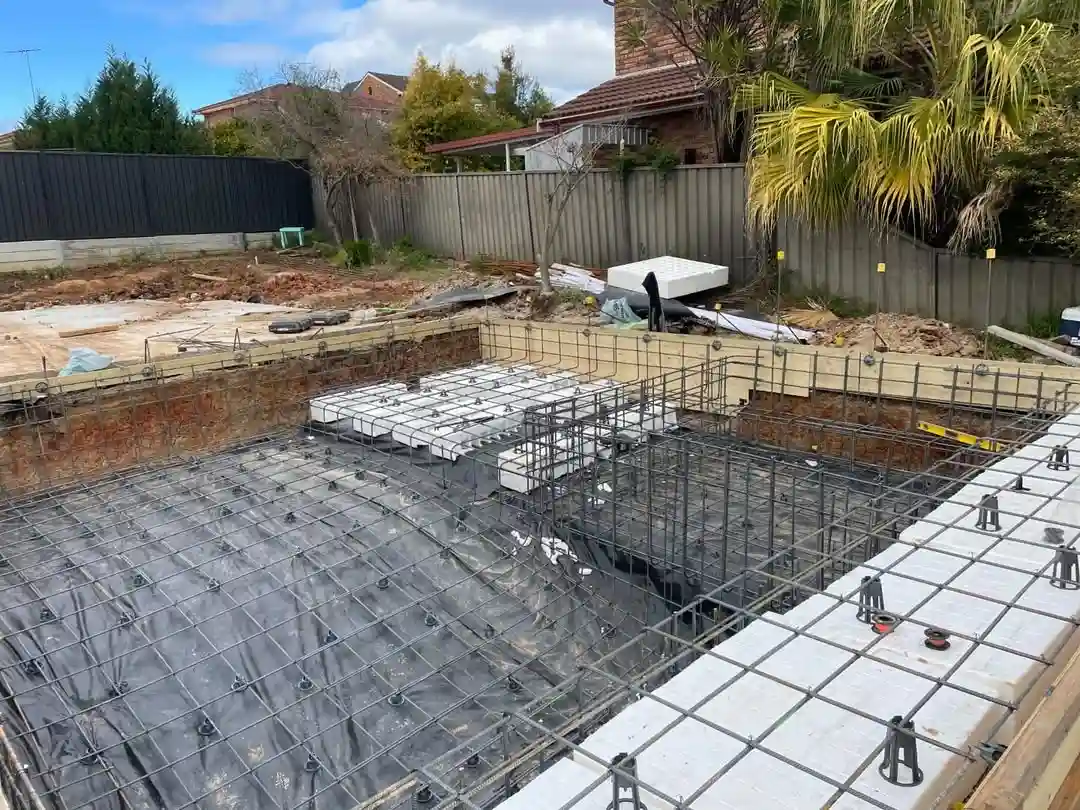
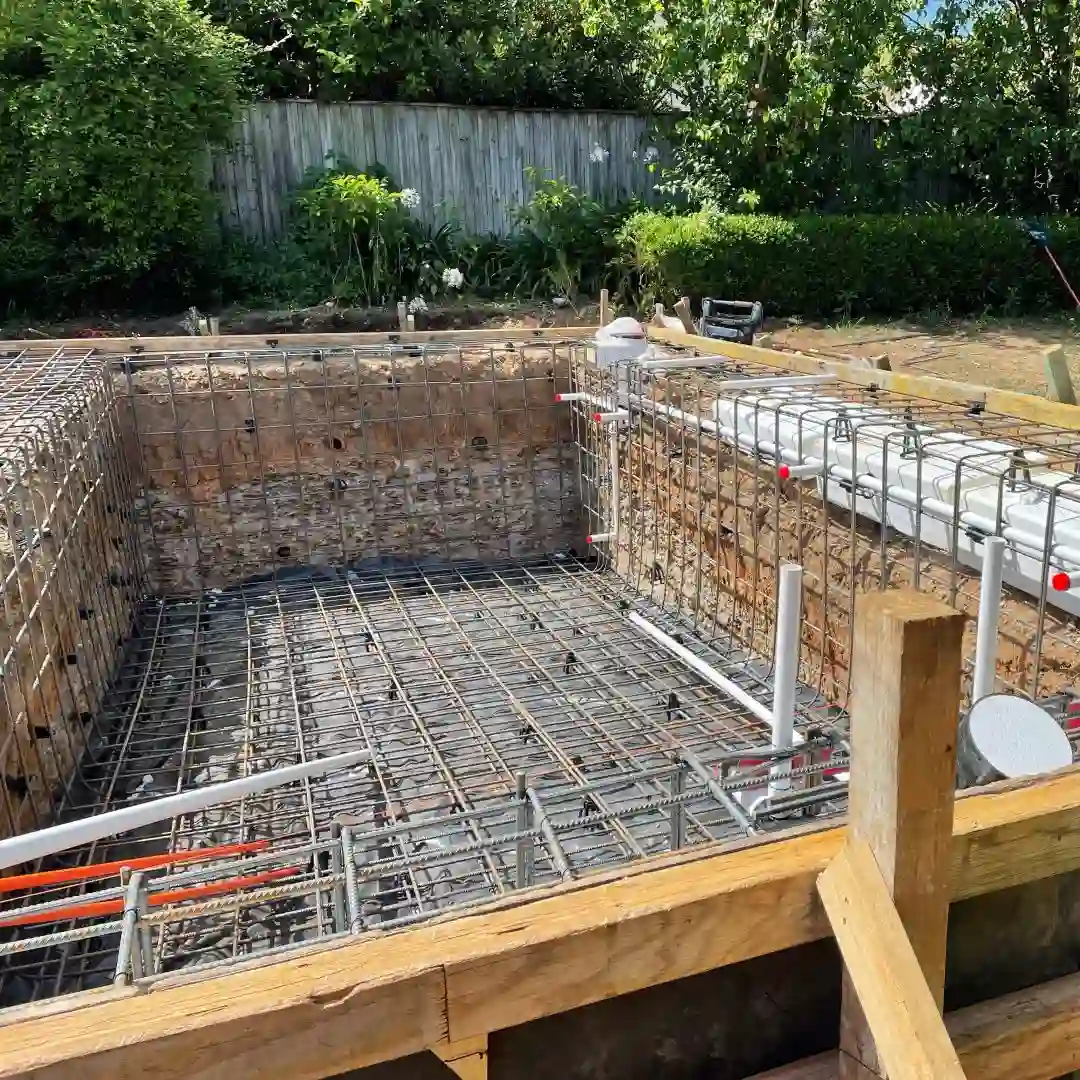
This tiny margin for error is driven by thermal dynamics and moisture. In regions like Sydney or Queensland, pools must withstand temperature variations of up to 30 degrees Celsius between seasons. This thermal expansion and contraction, paired with the internal weight of thousands of litres of water, creates immense tensile stress. By distributing deformed steel bars (typically spaced at 150mm to 200mm intervals), we ensure that stress is dissipated into thousands of microscopic, harmless “crazing” lines rather than a single, wide fracture that leads to a “leaky money pit.”
The “Shadow” Trap: Why More Steel Isn’t Always Better
A common mistake among inexperienced builders handling pool steel fixing in Sydney is the ‘more is better’ fallacy. Over-reinforcing a pool can actually trigger the very collapse you’re trying to prevent. The science lies in the application of shotcrete, which is pneumatically applied at high velocity.
For the concrete to properly bond, it must “wrap” around every bar. If bars are placed too close together—less than 65 mm apart—the high-velocity material cannot reach the rear of the steel. This creates a “shadow” or void—a hollow honeycomb pocket behind the bar. To mitigate this, engineering standards dictate that the maximum bar size for shotcrete applications should be a N16 (16mm) bar. Anything larger significantly increases the risk of shadowing, leaving the rebar unbonded and the shell effectively unreinforced.
The Skimmer: A Hidden Weak Point in Every Design
Structural failures rarely occur in the center of a wall; they happen at the junctions of stress. The skimmer is perhaps the most dangerous “weak point” in a pool’s Bond Beam. Because a skimmer requires a large rectangular cutout in the top of the pool wall, it effectively severs the horizontal reinforcement cage.
Without an engineered “bridge” of steel to reinforce this gap, the Bond Beam becomes a plain concrete cantilever sitting on a “dirt trap.” Under the weight of a cantilevered concrete deck or the pressure of shifting soil, this unreinforced section will crack. A professional build utilizes a calculated grid of supplemental steel around the skimmer to bridge the void and redistribute those converging pressures into the rest of the cage.
“Chairs” and Concrete Cover: The Most Overlooked Structural Requirement
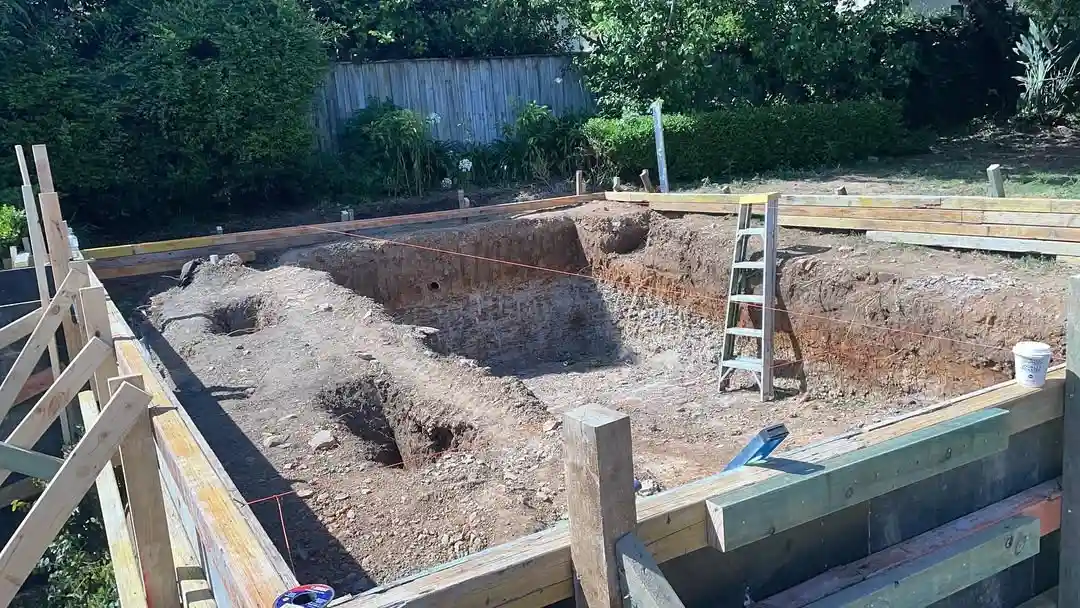
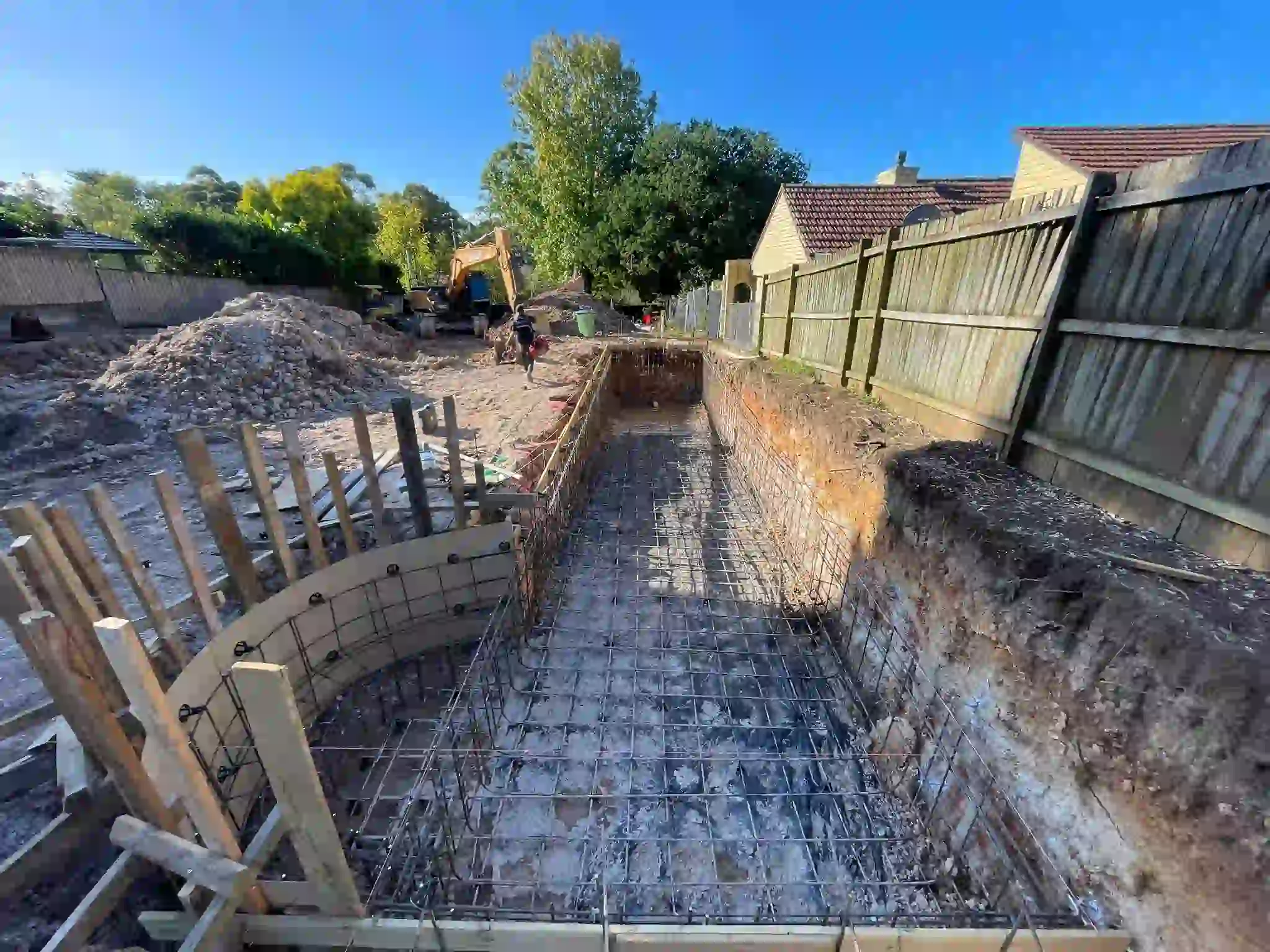
The most common defect we see in rebar placement for concrete pools is a cage sitting directly on the soil. To function, steel must be fully encased in concrete. This is achieved using bar chairs or spacers to maintain “concrete cover.”
The requirements for cover are strict and non-negotiable:
- Australian Standards (AS 2783): Requires 30mm of cover on the water face and 40mm–50mm on the soil face.
- The Consequences:
- Too Little Cover: Leads to moisture penetration, corrosion, and “spalling”—where rusting steel expands and literally pops the concrete off the shell.
- Too Much Cover: Results in “Reflective Cracking,” where the concrete surface is too far from the steel to benefit from its tensile strength.
The Sydney Factor: Soil that Moves Like a Fluid
In extreme climates like Sydney, the earth doesn’t just sit there; it behaves like a fluid. Engineers design for “Equivalent Fluid Pressure” (EFP), treating expansive clay soils as a material that exerts massive inward pressure as it swells with moisture.
To survive these environments, we utilize Grade 500N (offering a yield strength of 414 MPa). In aggressive soils, we may even specify epoxy-coated or galvanized rebar to provide a secondary barrier against chemical attack. The pool is a rigid vessel caught in a tug-of-war between the internal weight of the water and the external, fluid-like pressure of the shifting earth.
Conclusion: Building for the Next 30 Years
Shotcrete finishes and glass tiles may capture the imagination, but the “steel cage” determines the reality of your investment. A pool built to “look good for a season” often fails within 5 to 15 years due to inadequate cover, shadowing, or poor placement.
A pool built to “stand for a generation” is one where every bar is tied, every chair is placed at the 3-inch mark, and the cage is properly earthed. As you evaluate your project, the question isn’t whether the pool will hold water today—it’s whether the skeleton beneath is strong enough to hold your legacy for the next 30 years. If you’re planning a concrete pool build and want pool steel reinforcement in Sydney done to engineer-certified standards, contact Sydney Pools Steel for a free site assessment.